


It’s true, the impact of climate change is an ever increasing emergency as temperatures rise and glaciers melt. But that does not mean it is too late. It does not mean giving up. As Amma says, “Many people talk about environmental preservation, but true greatness lies in putting these principles into practice.”
For decades, she has led initiatives, both large and small, to restore humanity’s love and reverence for Mother Earth. Step-by-step, across the planet, people are finding ways to unite and put Amma’s words into practice.
This photo essay shares the power of just six of the countless actions.
Tree Planting
Impact of Climate Change: Droughts, wildfires, and destructive pests destroy vast forest ecosystems
Action: 6 million trees planted by volunteers across the globe
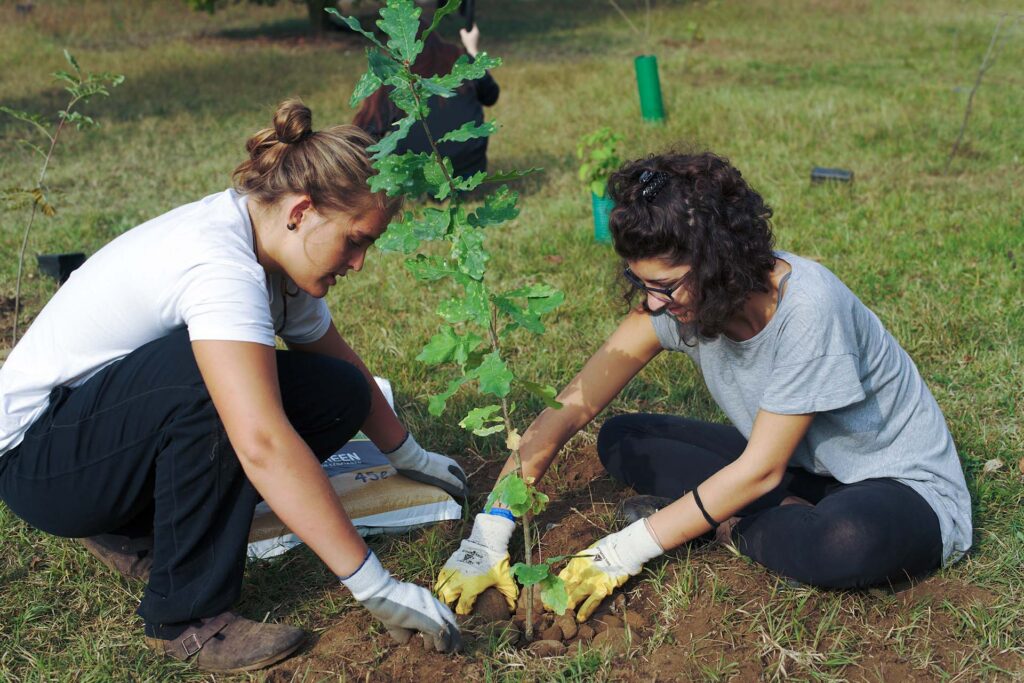
Planting trees in Italy
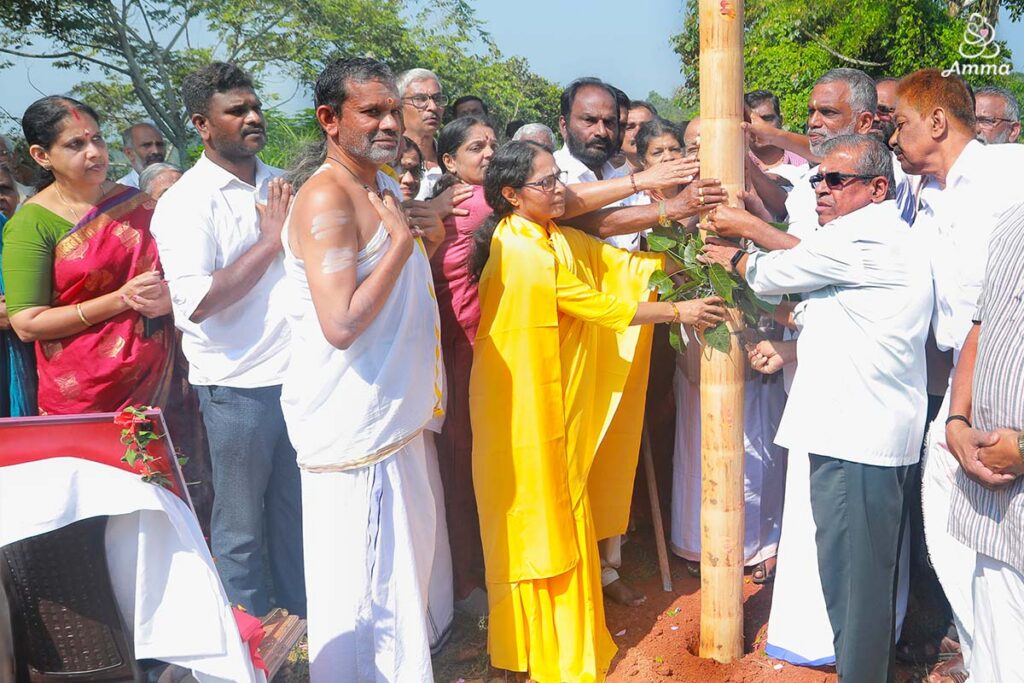
It’s a simple act, but brings such joy. Take a sapling and lovingly place it into the hole you have dug, and then stabilise it with soil and water. In 2001, volunteers began official tree planting campaigns in their communities in collaboration with local landowners, governments, and NGOs. Today, teams have planted more than 6 million trees worldwide.
In many places, the planter makes a pledge to care for the sapling for the first year of its life, helping ensure that it will become a tree that survives and prospers. The Ashram is a member organisation of the Trillion Tree Campaign, supported by the United Nations Environmental Programme.
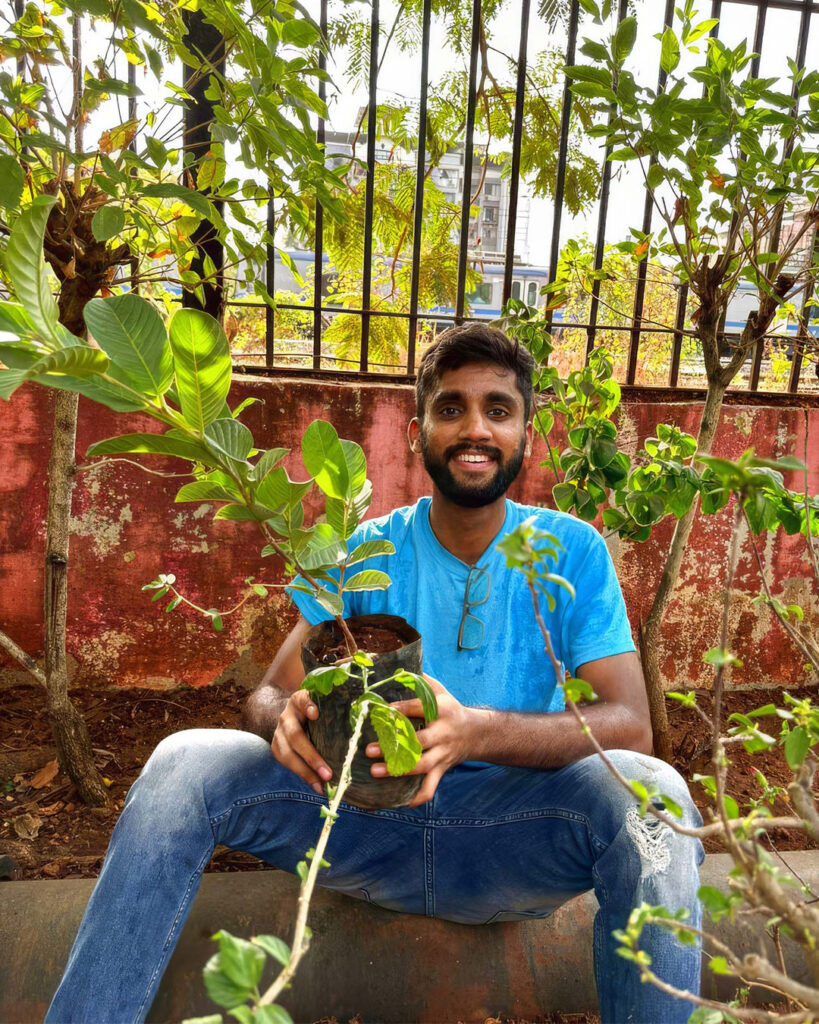
Preparing saplings in Mumbai
Safe Drinking Water for Rural India
Impact of Climate Change: Reducing freshwater reserves across the country
Action: A commitment to safe drinking water for 5,000 villages
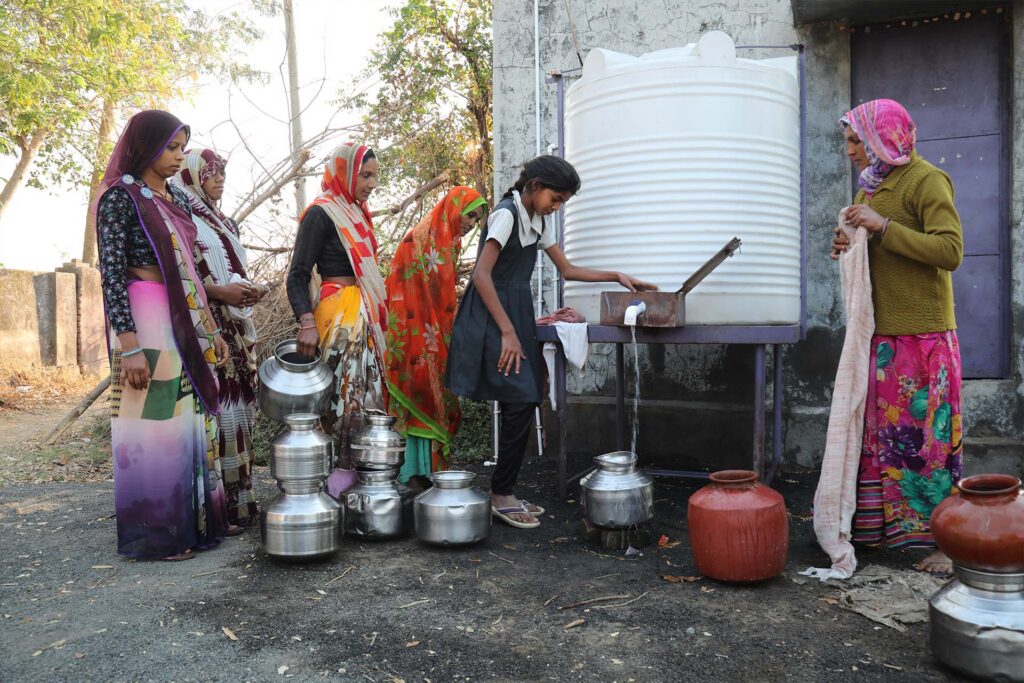
Amrita University’s Jivamritam Water Filtration System in Rajasthan
India has long faced the challenge of providing safe drinking water to people across rural areas. This includes the difficult work of fetching water from taps that are often far from their homes, a task usually assigned to women and girls.
In 2017, Amma launched Jivamritam Water Filtration Systems to build infrastructure for safe drinking water in 5,000 villages across the country. The system is designed to adapt to each location’s needs. It aims to provide 10 million people with potable water at a projected cost of ₹100 crore ($15.7 million).
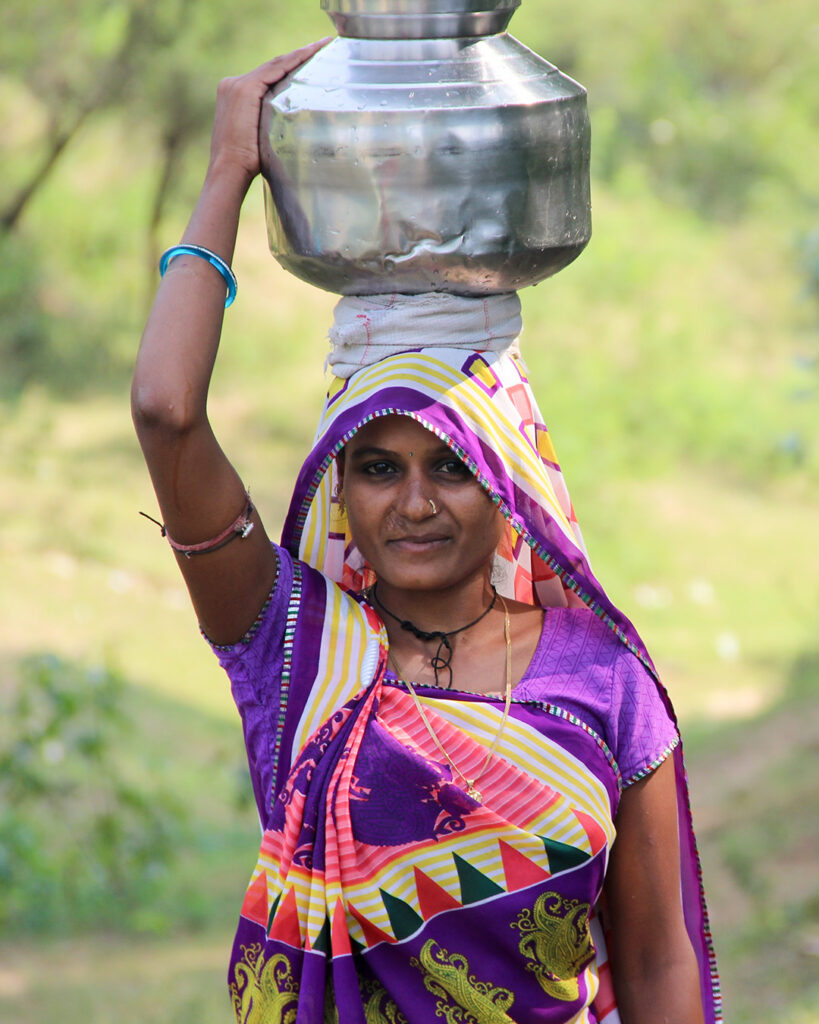
The local filtration systems save women and girls from walking long distances with heavy pots of water on their heads
Early Landslide Detection to Save Lives
Impact of Climate Change: Increasing landslides in vulnerable areas due to an increase in heavier, intense downpours
Action: Development of early landslide detection technology
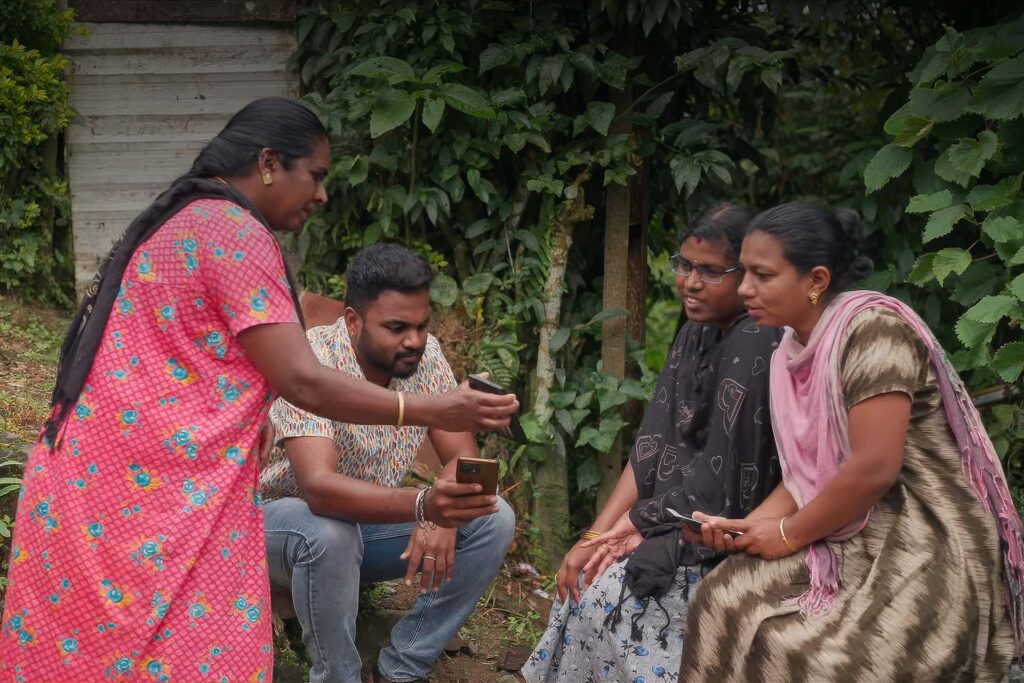
Training residents in Munnar, Kerala how to monitor warnings
When a landslide begins, there is not much time to evacuate to safe terrain. In 2009, Amrita University implemented its Landslide Early Warning System in Munnar, Kerala. As the world’s first wireless sensor network-based system, it is earlier and more reliable than traditional methods that rely mainly on rainfall data. In 2015, it was installed in Gangtok, Sikkim.
Both regions are among India’s most landslide-prone areas, and the system has issued several warnings over the years, saving countless lives. The community members are also trained through workshops and mock drills on how to read warning levels, follow evacuation routes, and move quickly to designated safe zones. This reduces panic because they know exactly what to do.
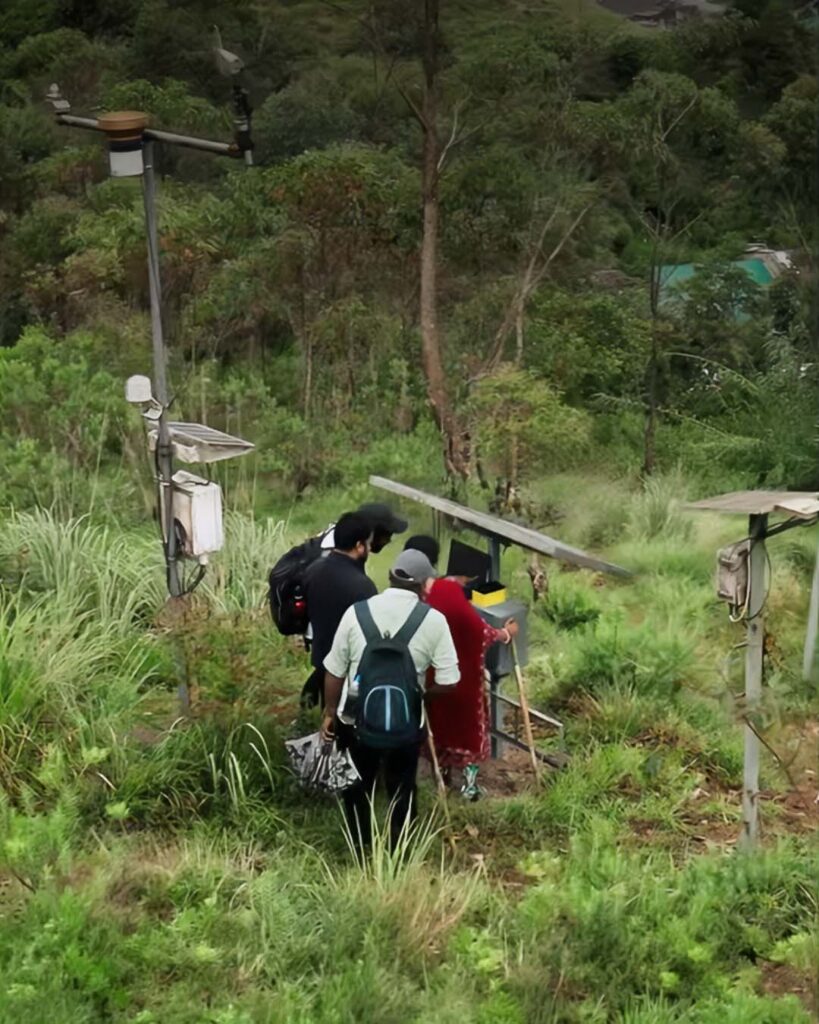
Scientists with Amrita University perform a regular check on the system in Munnar
Toilet Construction for ODF Villages
Impact of Climate Change: Extreme weather further contaminates critical water supplies
Action: Training women in toilet construction to support open-defecation-free villages
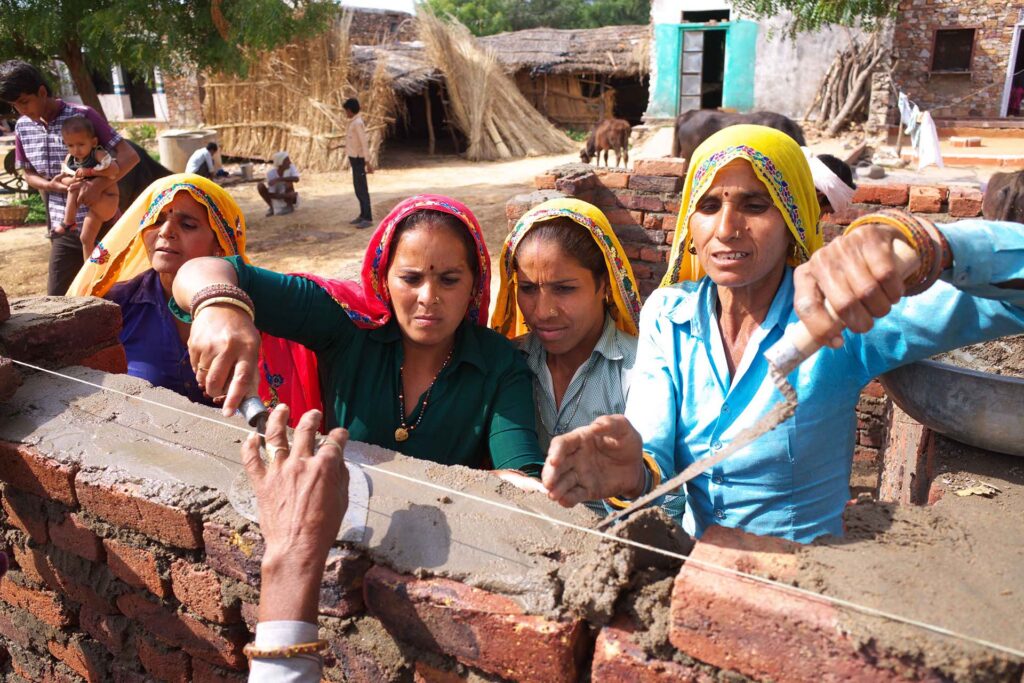
Women gain skills in a male-dominated trade
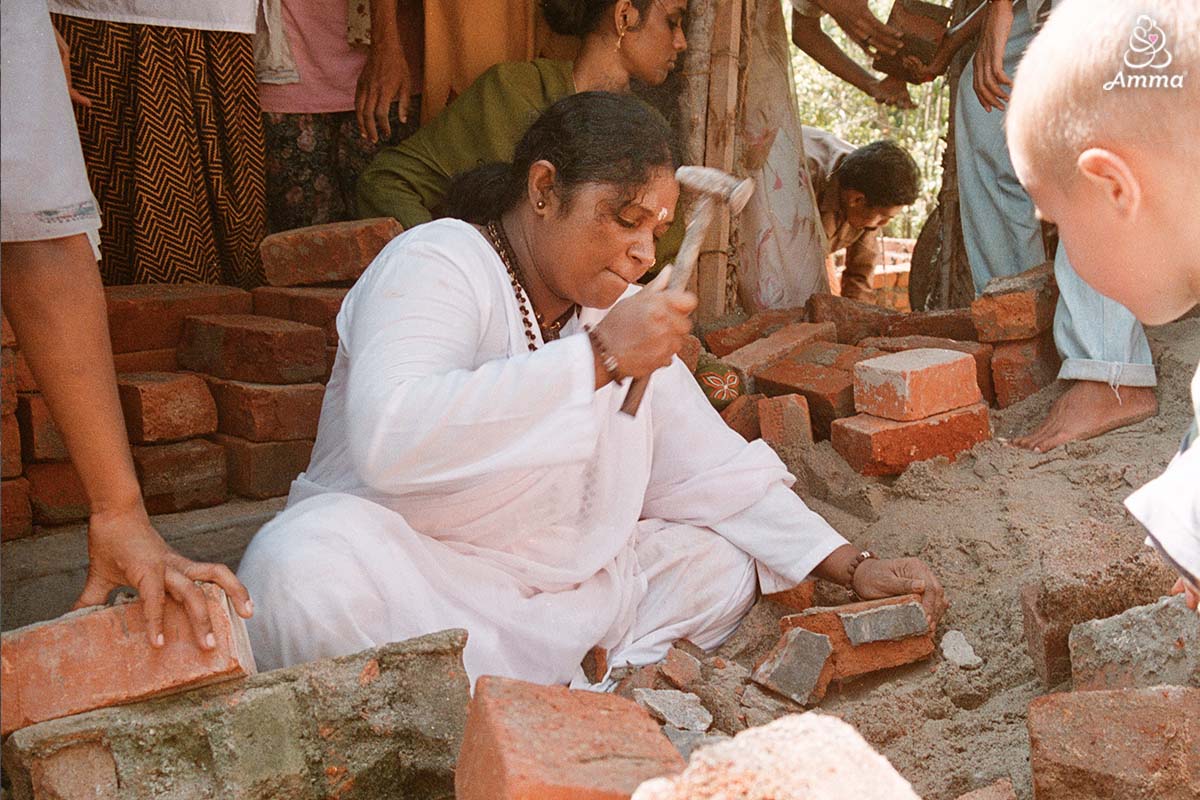
For women in villages, the absence of a private toilet is more than a health risk. Forced to walk to isolated areas, many face the risk of harassment and sexual assault. In 2014, to address the lack of toilets in rural India, Amma started vocational courses for women in masonry, plumbing and electrical wiring. These skills enable them to construct, install and maintain toilets in individual homes and public spaces. They also received training in community water management.
By 2018, the project reached 192 women across 12 states, and 12 of the villages were officially declared Open Defecation Free by the Government of India.
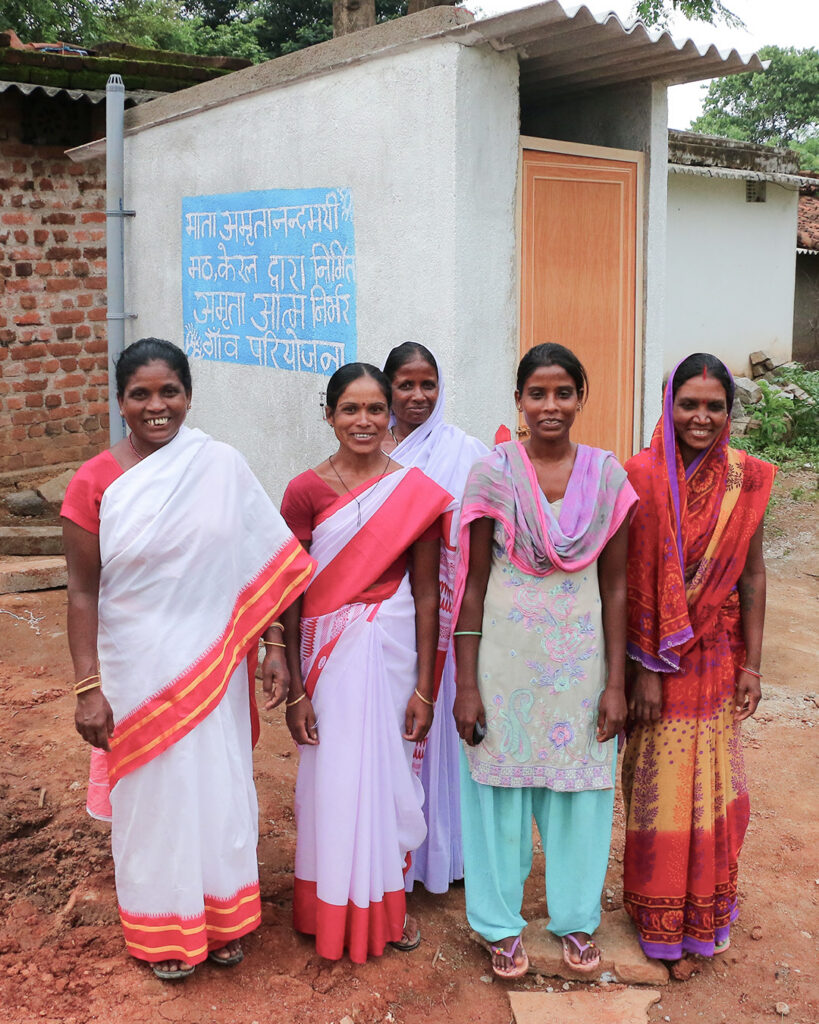
Together, the women have gained a new sense of self-confidence
Saukhyam Reusable Menstrual Pads
Impact of Climate Change: Greenhouse gases are rising, with decomposing plastic menstrual pads an often overlooked contributor to methane emissions
Action: 2.9 million Saukhyam Reusable Pads sold and distributed
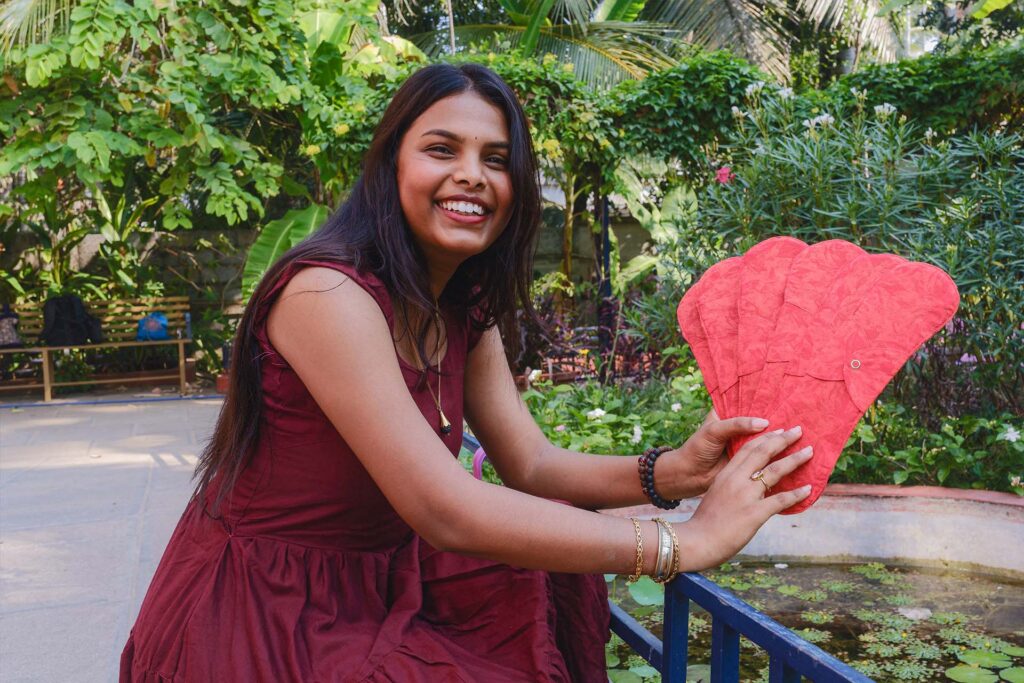
The project is helping free women and girls from period shame
Having your period should not require leaving a permanent, toxic mark on the planet. In 2017, Amma launched Saukhyam Reusable Pads to provide women and girls with an eco-friendly solution for menstrual hygiene. The pads are not only better for the environment, but also for women’s health because they are free of harmful chemicals. As the world’s first reusable pad based on banana fibre, they are more absorbent and upcycle what would otherwise be agricultural waste.
The project has also provided the pads free of cost to women and girls in rural India to support their awareness of menstrual hygiene. To date, more than 2.9 million pads have been sold and distributed.
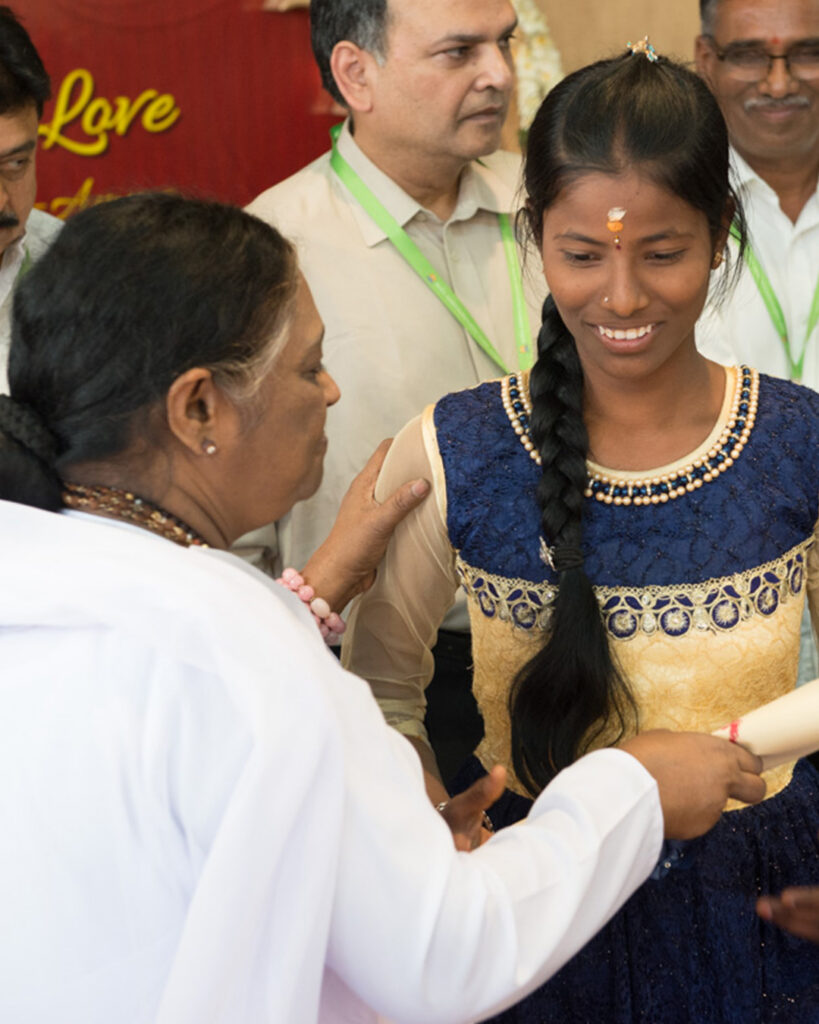
Amma distributing Saukhyam Reusable Pads in Hyderabad
Public Clean-up Drives across the Globe
Impact of Climate Change: Extreme weather effects are magnified by unmanaged waste, which blocks storm drains, triggers flooding, spreads toxic runoff, and accelerates public health crises
Action: 100,000+ volunteers conduct public cleanup drives around the world
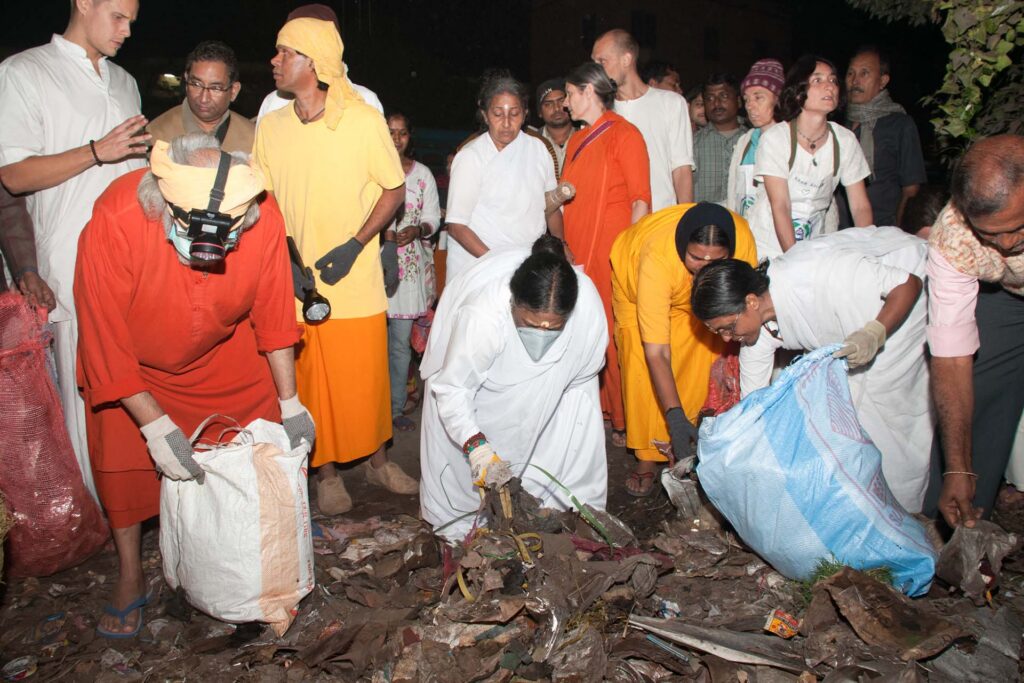
2013 – After 12 hours of giving darshan, Amma immediately hit the streets to lead a clean-up drive in Kolkata
Our world’s health is our own health. In 2010, Amma launched the Amala Bharatam Campaign (ABC) with volunteers cleaning public spaces such as roads, bus stands, and markets. This includes the sorting of garbage, recycling, and proper disposal of waste. ABC also works to make people aware of the need to avoid littering, spitting, and urinating in public. It is ongoing in every language and every state in India.
These actions inspired Amma’s children across the world to organise clean-up drives in their communities. In more than 50 countries across Africa, the Americas, Asia, Australia, and Europe, 100,000+ volunteers conduct 1,700 public clean-up drives each year.
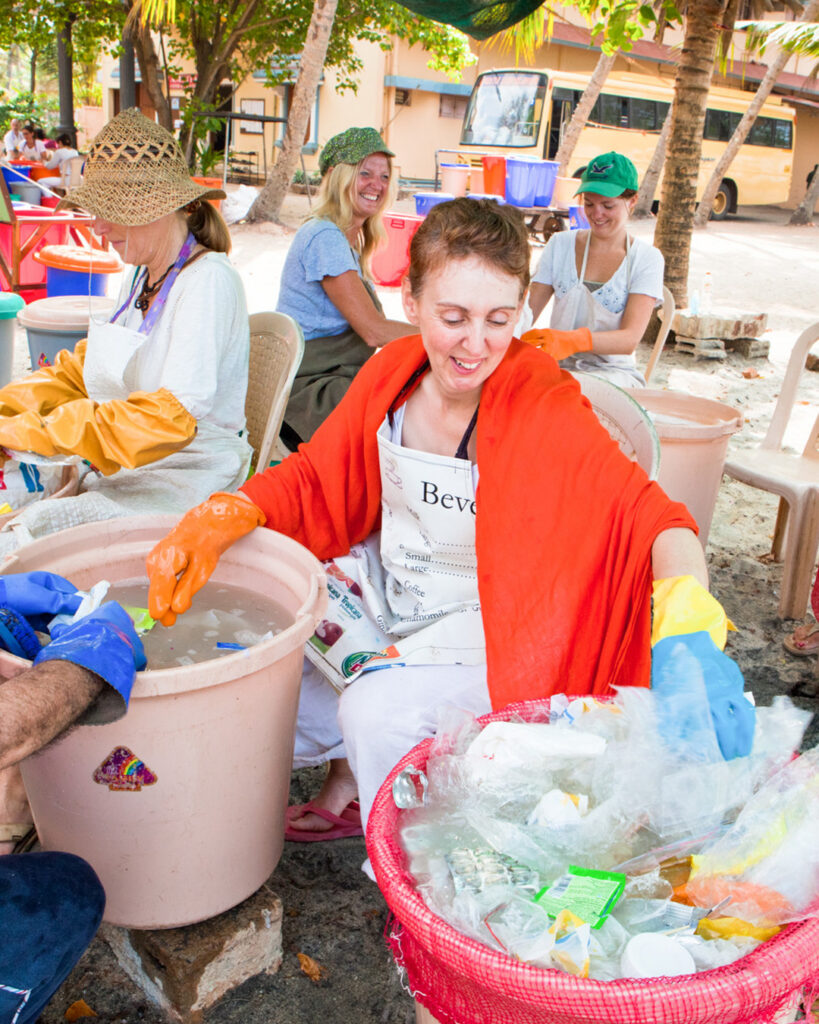
Sorting and cleaning plastics for recycling
Our earth is serving us. The sun, the moon and the stars all serve us. What can we do in return for their selfless service?
Amma