



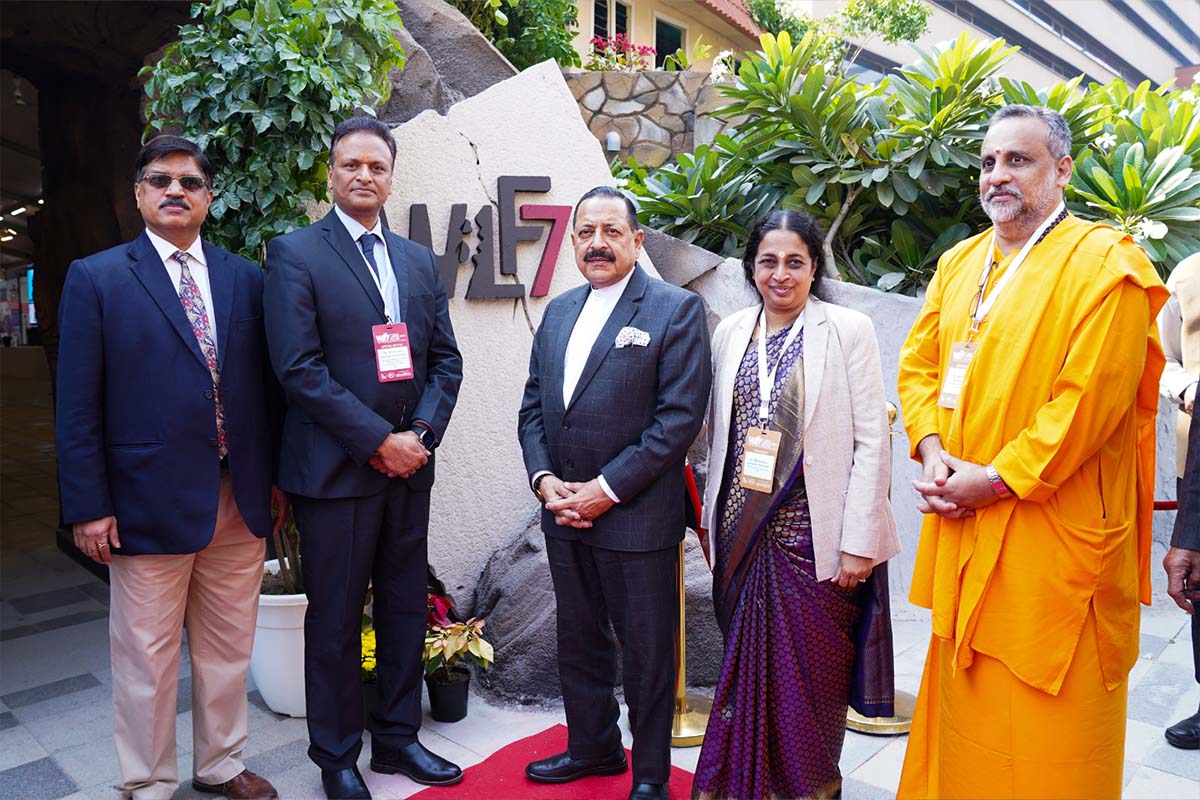
The 7th World Landslide Forum (WLF7) opened at Amrita University’s Faridabad campus on Monday, September 23, 2026, marking the first time the international gathering is being held in India and South Asia. It brings together researchers, engineers, policymakers and disaster management practitioners to examine how landslide science could inform decisions on infrastructure, land use and early warning.
The proposed Faridabad Declaration was presented for consideration following a high-level review of the Kyoto Landslide Commitment 2020. The declaration is intended to set priorities for international cooperation on landslide risk reduction and help translate scientific findings into decisions on where to build, how to protect infrastructure, and how to prepare communities for emergencies.
Union Minister of State for Science and Technology and Earth Sciences, Dr. Jitendra Singh delivered the inaugural address. He described how India is steadily strengthening its approach to landslide risk—from responding after a disaster to investing in prevention, forecasting and preparedness.
“The country’s varied terrain, from the Himalayas and the Northeast to the Western Ghats, makes sustained research and coordination especially important. We are expanding landslide susceptibility mapping and forecasting, building stronger databases and supporting the use of geospatial technologies, satellite observations, sensors, and AI to improve risk assessment,” he said.
“Yet technology and scientific research must ultimately support timely action on the ground. This calls for continuous monitoring, close cooperation among institutions, and effective last-mile warnings that communities can trust and act upon.”
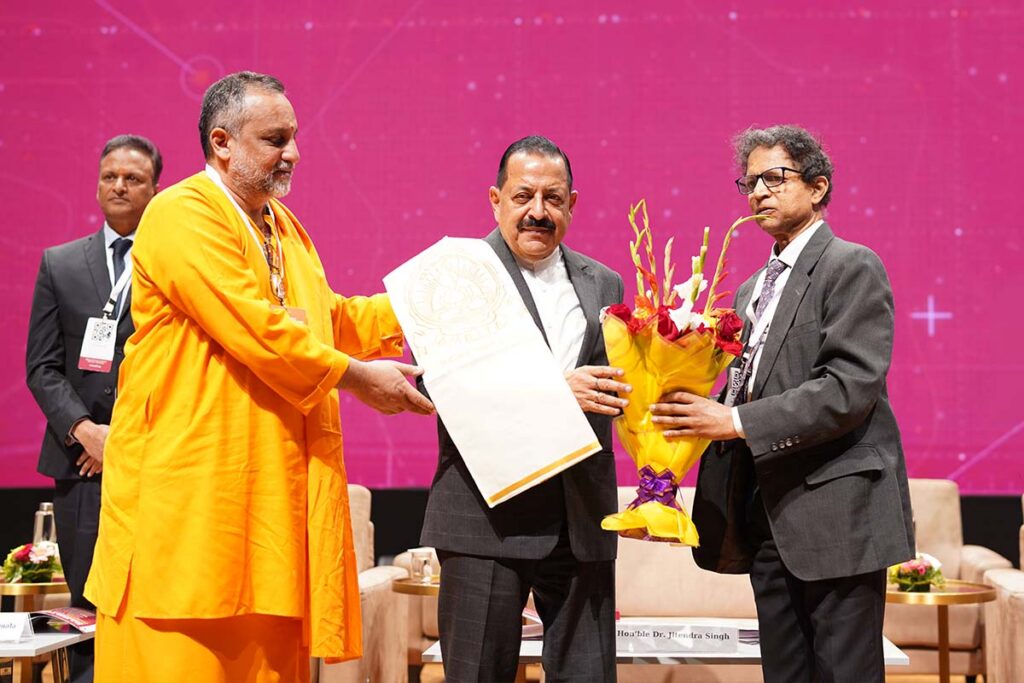
The opening ceremony featured a video message from Amma as Chancellor of Amrita Vishwa Vidyapeetham. Dr. Maneesha V Ramesh, Forum Chair and Pro Vice-Chancellor of Amrita, and Prof. Željko Arbanas, President of the International Consortium on Landslides (ICL), welcomed delegates. ICL is the WLF’s founding parent organization and primary organizer.
“Landslide risk reduction calls for more than scientific progress; it calls for collaboration, care and a shared commitment to the communities most at risk. Inspired by Amma’s vision, Amrita has worked over the past two decades to translate research into early-warning solutions for vulnerable regions,” said Dr. Maneesha, who is also the Vice President of ICL.
“We hope WLF7 will strengthen connections among scientists, institutions, governments and communities, and encourage continued efforts to ensure that knowledge reaches those who need it.”

The opening-day programme also featured Dr. Srinivasa Kumar Tummala, Secretary, Ministry of Earth Sciences, Govt of India; Dr. Krishna S. Vatsa, Member and Head of Department, National Disaster Management Authority (NDMA); and Shri Dinesh Vitthalrao Ganvir, Director General, Geological Survey of India (GSI).
International dignitaries on the programme included Dr. Soichiro Yasukawa, Chief of UNESCO’s Disaster Risk Reduction Unit; Prof. Kyoji Sassa, Secretary-General of the Kyoto Landslide Commitment 2020; Prof. Matjaž Mikoš, Chair of the Global Promotion Committee for the International Programme on Landslides and the Kyoto Landslide Commitment; and Prof. Irasema Alcántara-Ayala, President-Elect of the ICL.
Amrita began its landslide research in 2006, developed a wireless sensor network for early warning in Munnar, Kerala, and later extended AI-enabled monitoring to Sikkim. That field experience informed the university’s contribution to the forum’s discussions on early warning and community preparedness.
Amrita hosts WLF7 under the aegis of the International Consortium on Landslides (ICL), in collaboration with UNESCO and other international partners. The forum is scheduled to continue through 27 November under the theme Landslide Science and Practice for Safe and Resilient Communities.