


The new UNESCO Chair makes Amrita the only university in India to host three Chairs, working together at the intersection of inclusive education, gender equality, and global sustainability.
With a vision to champion educational access for people with disabilities, Amrita University has partnered with UNESCO to begin its Chair on Assistive Technologies in Education. The aim is to bridge global research with practical solutions based on the latest AI, audio and video solutions.
Amrita is now the only university in India to have three UNESCO Chairs, as this new Chair joins the Chair on Gender Equality and Women’s Empowerment (established 2016) and the Chair on Experiential Learning for Sustainable Innovation and Development (established 2020).
The agreement was formally signed by Audrey Azoulay, Director-General of UNESCO, and Dr. P. Venkat Rangan, Vice Chancellor of Amrita. Dr. Prema Nedungadi, Associate Dean with the School of Computing, and Dr. Raghu Raman, Dean with the School of Business, serve as Co-Chairs.
“Amma has always taught that true compassion means empowering every individual to live with dignity and independence. She has established schools for children with intellectual disabilities and for the deaf.
“Alongside, Amrita University is creating technologies that give voice to the voiceless, sight to the blind through audio description, and communication to the deaf through sign language innovation,” said Dr. Nedungadi.
“This integration of education, research, and service for people with disabilities embodies Amma’s principle of compassion in action, and has now been recognized globally through the UNESCO Chair on Assistive Technology in Education.”
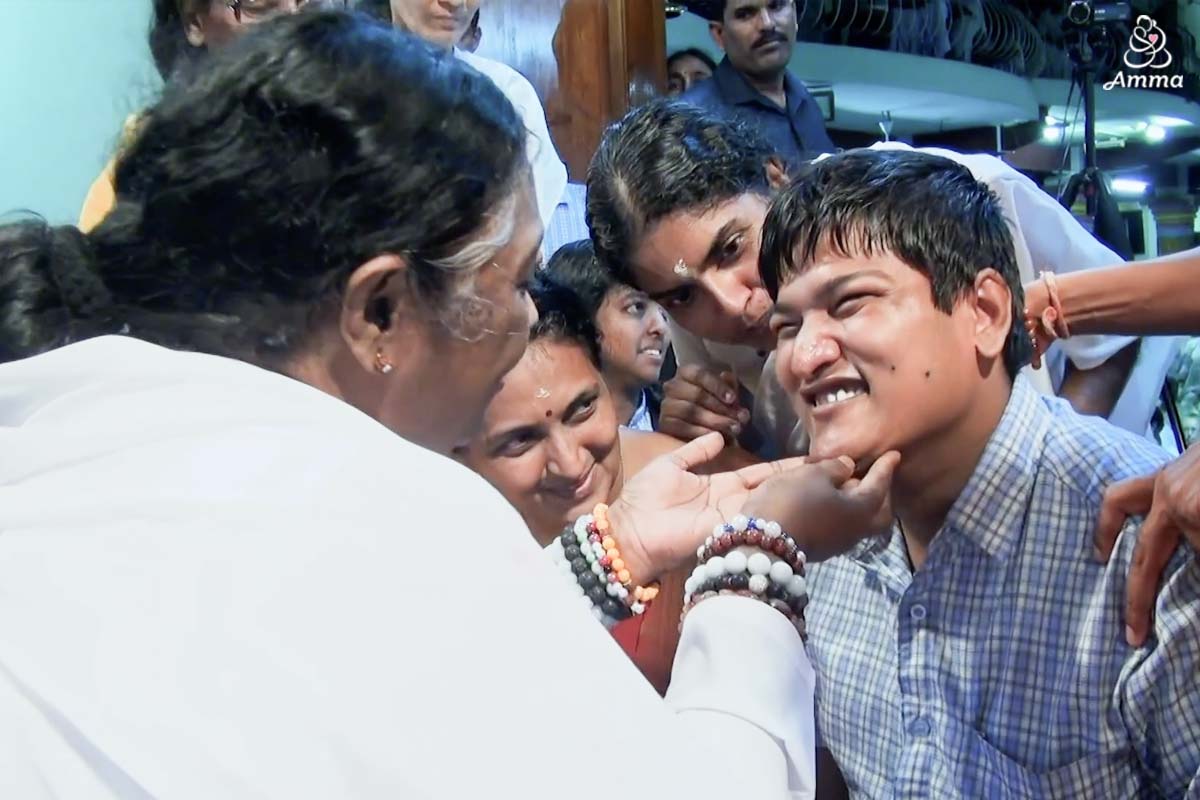


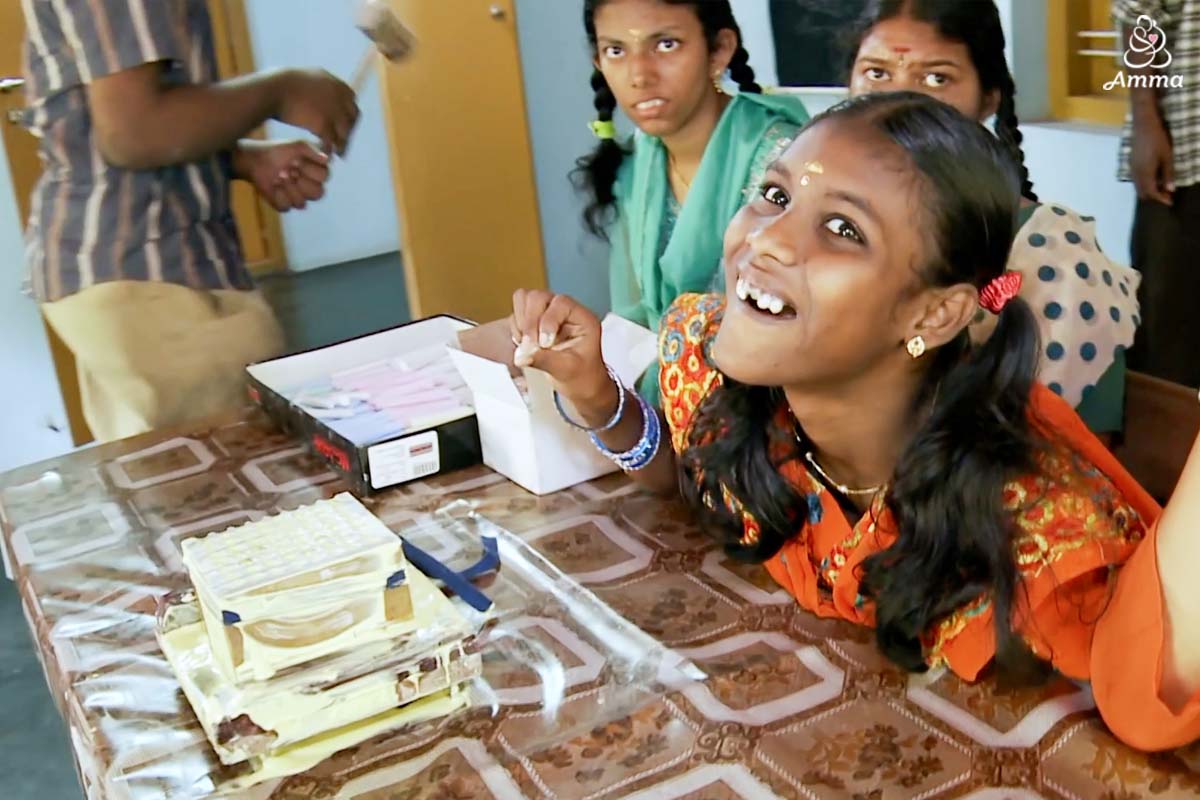
Amma began schools for children with disabilities in 1996. Her inclusive approach instills them with independence and self-confidence by giving them a voice in decision-making.
The Chair will focus on developing AI-enabled chatbots, Indian Sign Language (ISL) video recognition, and audio description tools, in addition to capacity-building through academic training and international collaboration.
It is also developing an ISL-integrated accessibility interface for e-Governance services, with an initial version already implemented on the UMANG platform, developed by the Ministry of Electronics and Information Technology (MeitY) and the National e-Governance Division (NeGD).
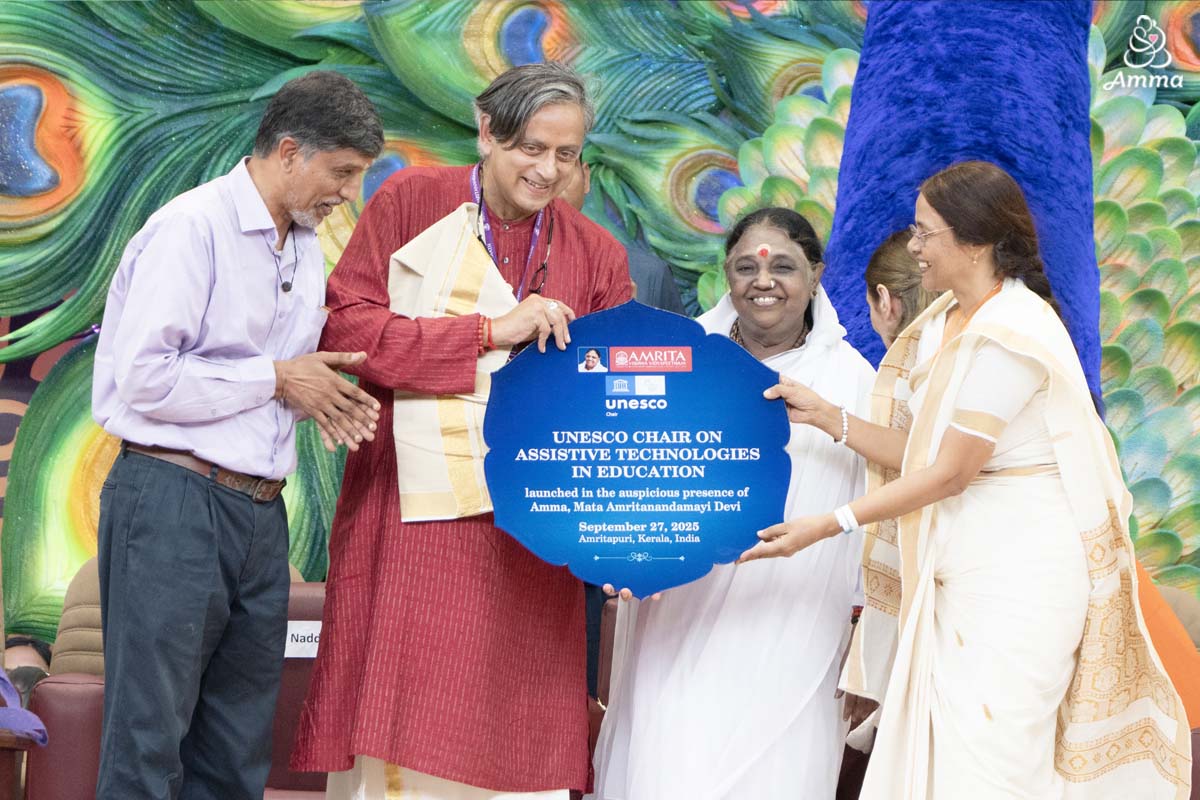
With Amma as Amrita’s Chancellor, the launch ceremony took place during the celebrations for her 72nd birthday. Dr. Shashi Tharoor, India’s Member of Parliament for Thiruvananthapuram, formally inaugurated the Chair. Before entering politics, he dedicated nearly 30 years to the United Nations with pivotal roles in global diplomacy, communications, and humanitarian affairs.
Stefania Giannini, UNESCO Assistant Director-General for Education, welcomed the new initiative, stating that the Chair joins “over 10,000 academics worldwide dedicated to open collaboration, social impact, and knowledge sharing for inclusive global progress.”
With its three UNESCO Chairs, Amrita now stands as a leading member of UNESCO’s global UNITWIN network, working at the intersection of gender equality, sustainable development, and inclusive education. They embody the university’s holistic approach—uniting research, community engagement, and global collaboration to address humanity’s most pressing challenges.
Through the Ashram, Amma has already led transformative educational initiatives for children with disabilities. In 1996, the Amrita Speech and Hearing Improvement School opened, one of the few schools in Kerala that scientifically teaches hearing-impaired children to speak.
In 2009, the Amrita Institute for Differently Abled began with two schools for students with Down’s syndrome, epilepsy, autism and other learning disabilities. By listening carefully and going to their level of understanding, this approach to therapy allows development as each child decides.
This forward-thinking dedication reflects Amma’s continued leadership in aligning academic excellence, compassion-driven research, and on-the-ground initiatives—the guiding light of her vision for education based on spiritual values and selfless service to all of creation.