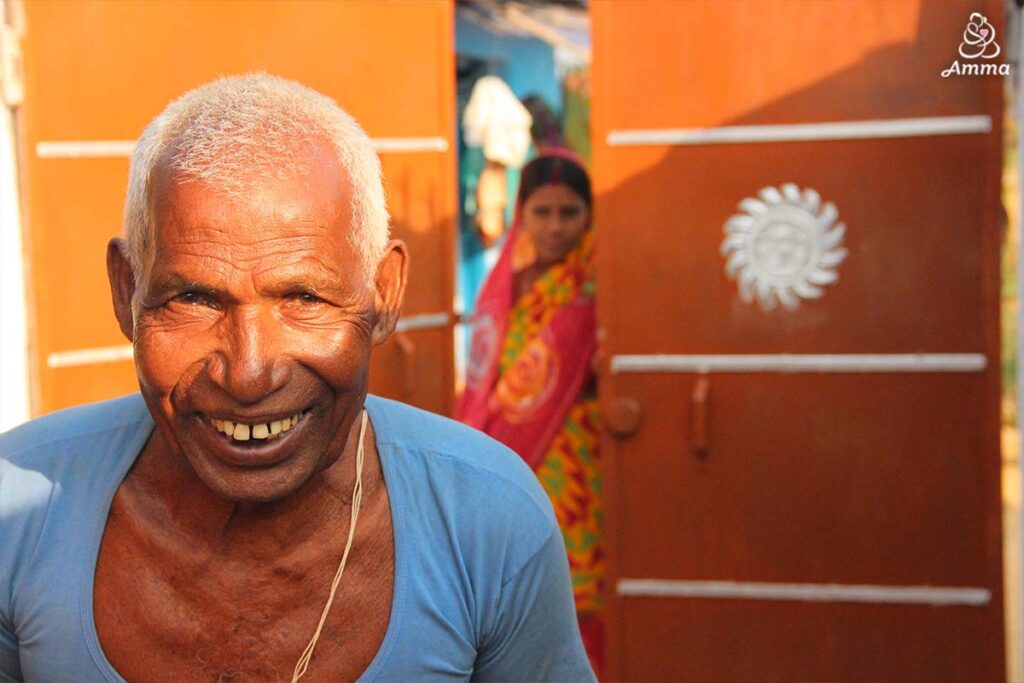



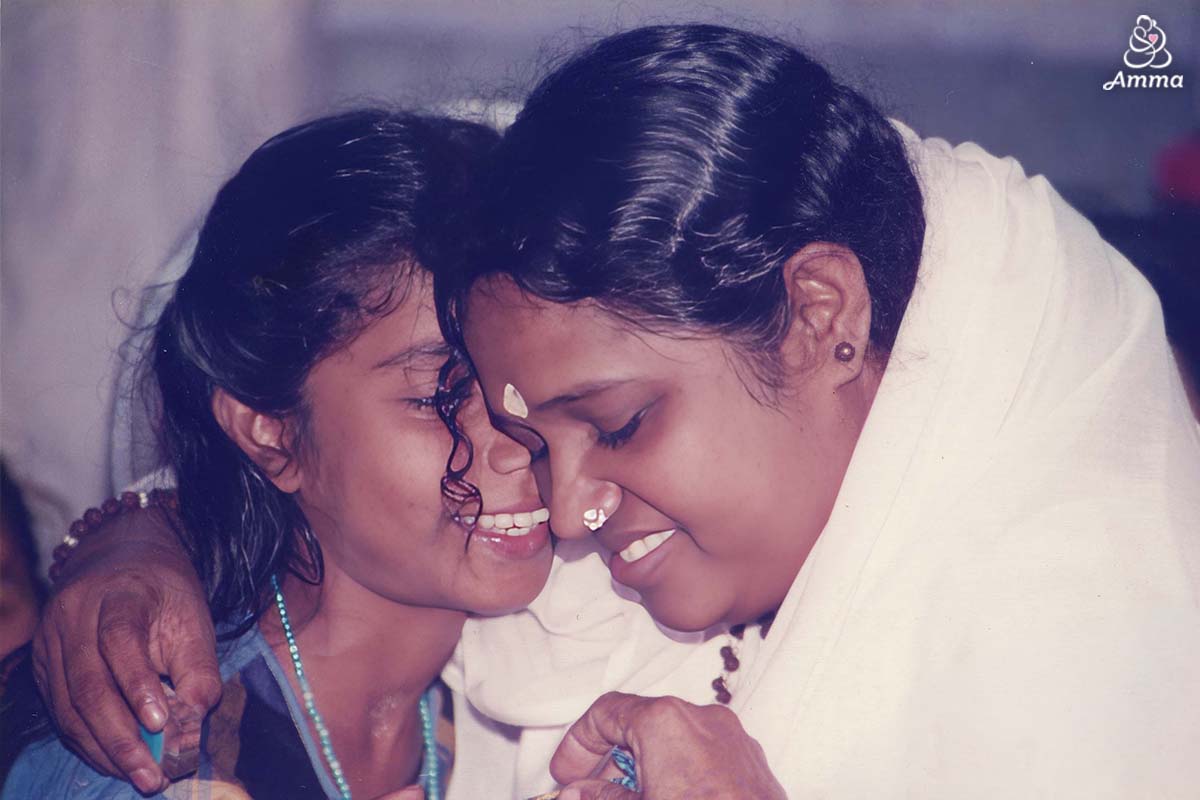
In isolated hill villages and forest hamlets across the country, India’s Indigenous Peoples live their customs and religions in communion with nature. Some of their traditions are so ancient they predate the Hindu faith.
Regardless, the Adivasis have faced displacement and hardship for nearly two centuries, as the modern world began to conflict with their traditional ways. With today’s development encroaching on their land ever more quickly, they have been thrown into poverty and malnutrition while their homes disappear and their bond with Mother Earth fades away.
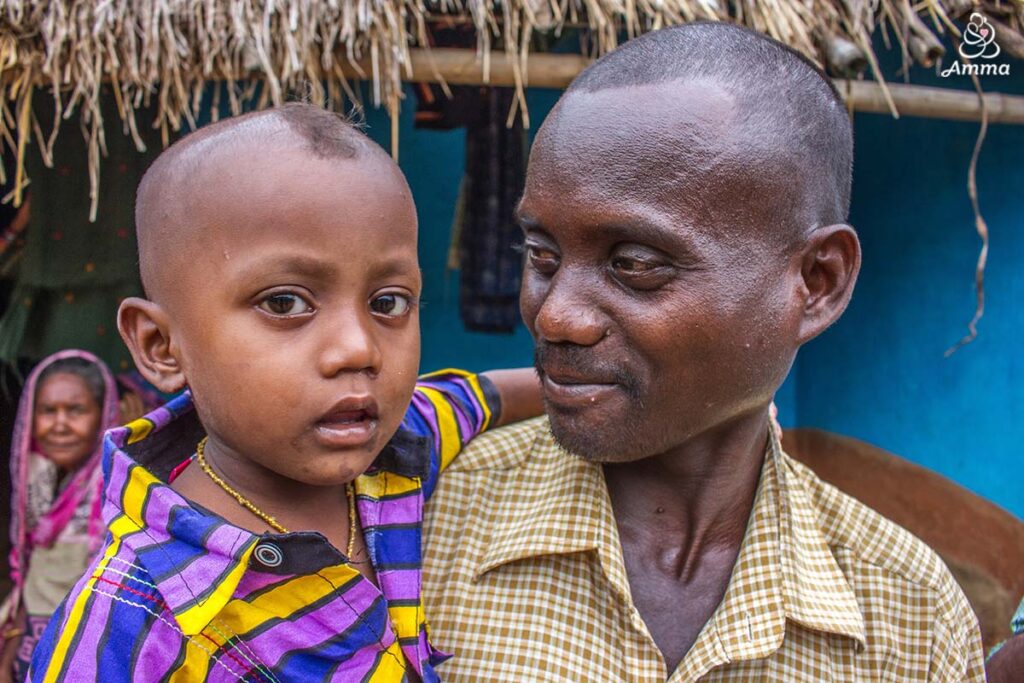
Amma began more than 40 years ago to re-establish and sustain their ways of life. She started with just a small number of students through tutoring centres in a remote area of Kerala. Today, the work has expanded into multi-disciplinary projects led by Amrita University that include partnerships with the Government of India and other institutions.
Her reach is vast and has become a powerful model for improving the lives of tribal communities that then contributes to learning, research, and innovation. They are frameworks that can be freely shared to uplift Indigenous Peoples across the world.
Impact
Recognition & Reach — Amrita University has been declared a Tribal Centre of Excellence through Digital Inclusion by the Govt of India and has reached 9,000+ direct and 170,000+ estimated indirect beneficiaries in health, literacy, and digital awareness.
Education & Digital Literacy — 7,760 children across 41 tribes in 21 states have been mentored through the RITE tablet-based education programme, and 1,000 youth have been trained in basic computer skills and health awareness.
Youth Leadership — Amrita Awareness Ambassadors across 22 states lead peer and community efforts against substance abuse and human trafficking, reaching more than 50,000 adolescents.
Health — Charitable hospitals and outreach provide care to 6,700+ tribal patients each year in Wayanad, Kerala, and 1,200+ people annually in Kalahandi, Odisha, alongside free rehabilitative dental care for 5,000+ beneficiaries.
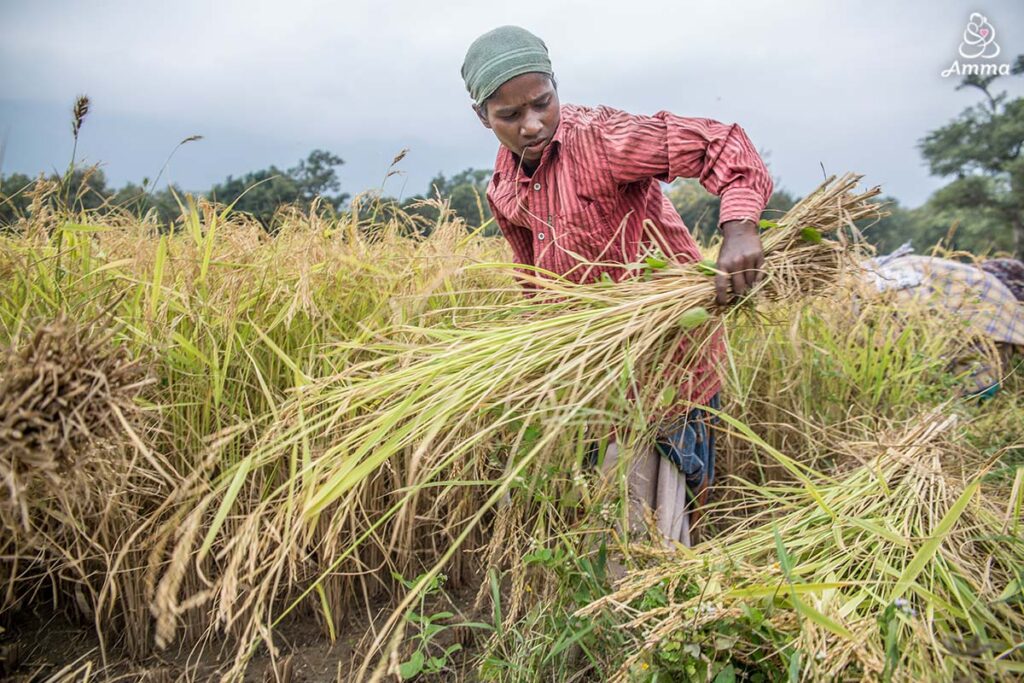
Livelihood & Infrastructure — 100 tribal farmers in Sadivayal, Tamil Nadu and Attapady, Kerala are reviving the ancient Pancha Krishi farming practice. In two villages in Kerala, independent hydro and solar electrical grids have been built for homes with no access to power.
How Amma’s Tribal Initiatives Evolved
Early 1980s: A small start in Attapady
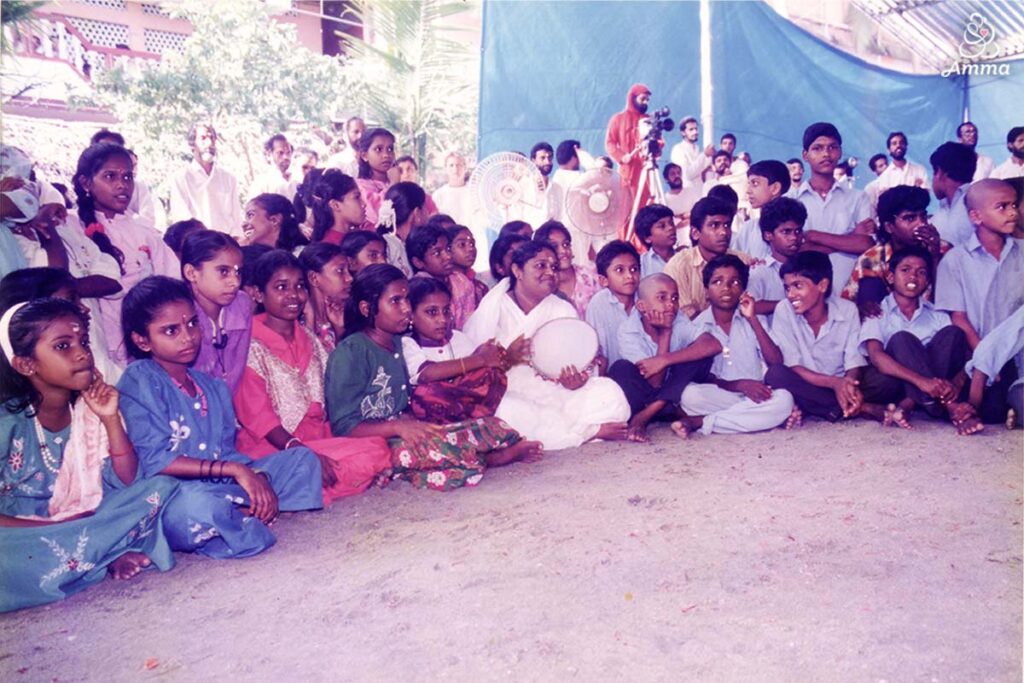
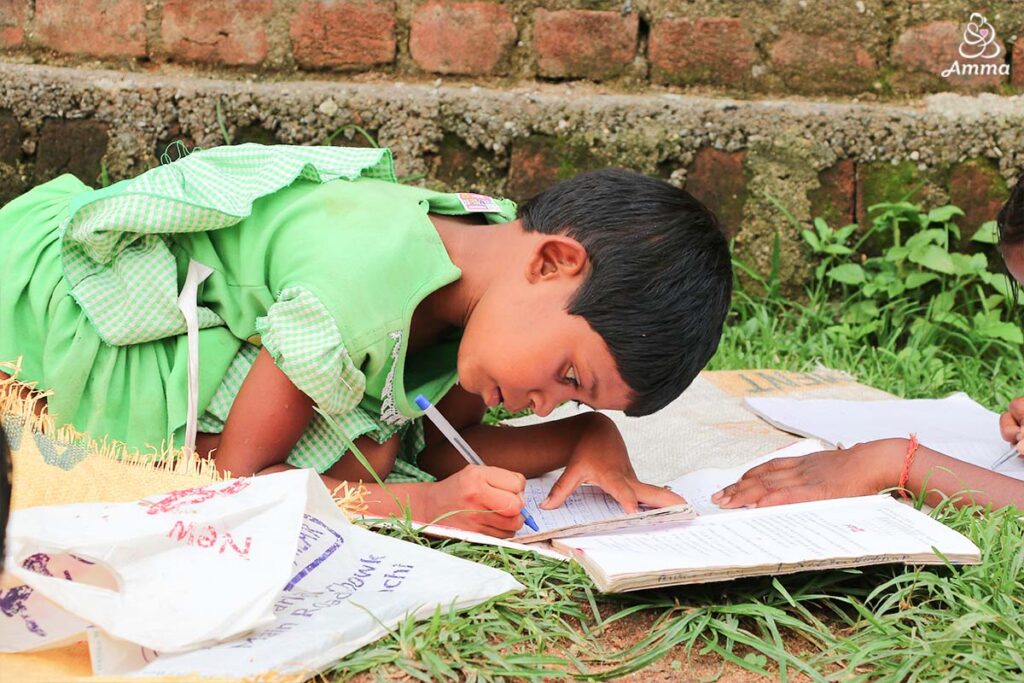
Amma’s initiatives began in the 1980s with a small project in Attapady, Kerala. One of the state’s most concentrated tribal regions, it is a hilly, forested area in Palakkad district in the Western Ghats along the Tamil Nadu border. Because the children had limited access to schools, Amma started a few simple tuition centres to encourage them to study basic subjects.
1989: Shelter for children in crisis
The administrators of a children’s home in Paripally, Kerala, came to Amma in despair: the orphanage was out of funds, and its children, most of them from tribes, were about to be turned out onto the street.
The children were malnourished and living in unsanitary conditions, having already lived through poverty and its resulting drug and alcohol abuse, domestic violence, and sexual abuse. It is a trauma pattern that occurs the world over when Indigenous Peoples are dispossessed of their traditional lands and their livelihoods are undermined.
Amma completely renovated the facilities with a profound concern for their wellbeing. Having sheltered up to 400 children, today, Amrita Niketan is a home where they are well cared for with nutritious food, high-quality education, and training in traditional arts.
- Shelter for up to 400 children per year
- Nutritious food, high-quality education & revival of cultural heritage
1989: Rebuilding the path to walk upon
That same instinct, meeting an immediate crisis and then staying for the long haul, repeated itself in the hills the children themselves had come from. In the tribal hamlets of Attapady, the Amrita Tribal Center took root as a base for building self-supporting communities with health care, education and livelihood support. It was slow, patient work: the kind that doesn’t make headlines but changes what a village looks like a generation later.
Early 2000s: From one village’s children to many
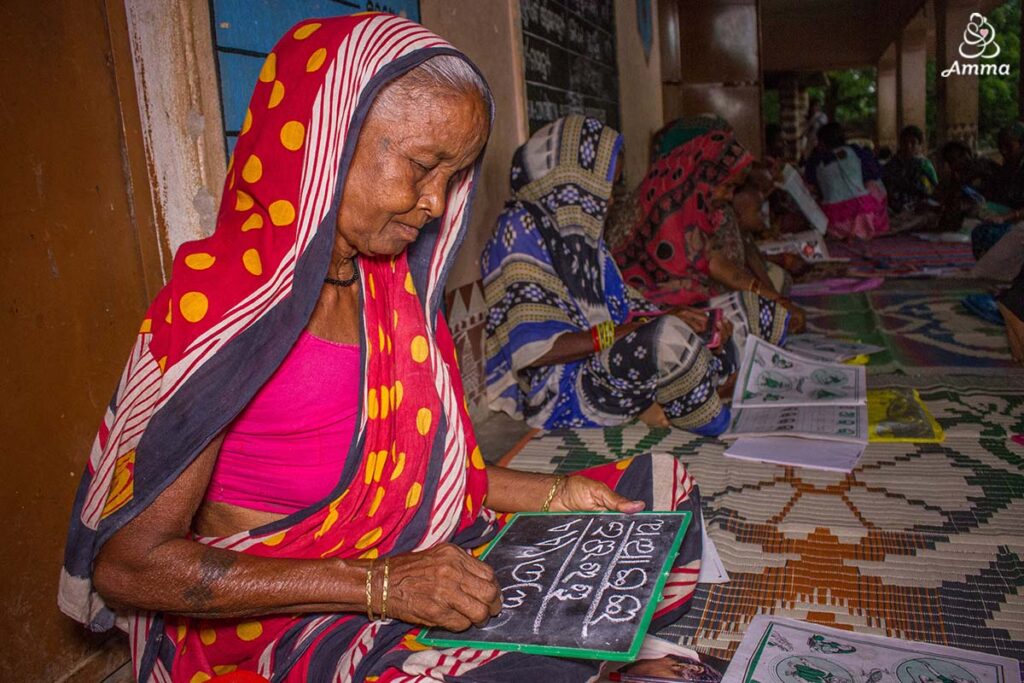
With the new millenium, Amma’s vision scaled into something more structural. Amrita University has established 41 rural education centres across 21 states, each one bringing together health awareness, social and gender equality, and most crucially, respect for local culture and heritage rather than an imposition of outside values.
Tribal children became a gateway to reach their families. Educate a child, and a household follows. In 2008, that work earned formal acknowledgment when Amrita received an award from UNESCO and India’s National Literacy Mission for its adult literacy efforts among tribal communities.
- 41 tribes
- 21 states
2004: A hospital built on trust
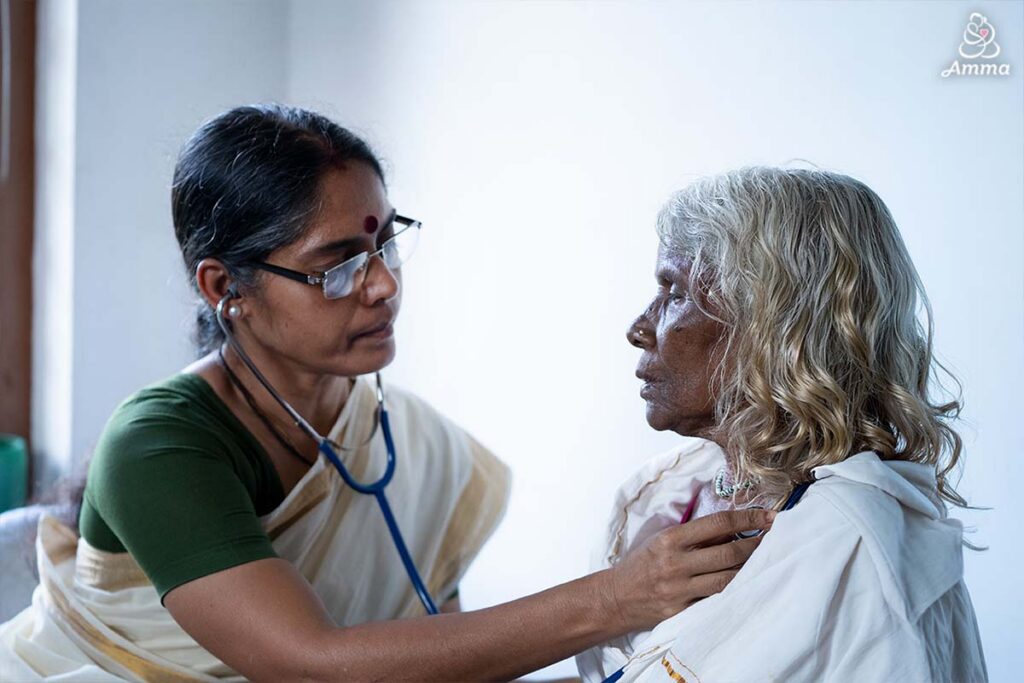
Amrita Kripa Charitable Hospital in Kalpetta, the capital of Wayanad district, was established in late 2004, under the guidance of Dr. Sanjeevan Vasudevan and Dr. Ajitha. The small charitable facility focuses on serving Wayanad’s Adivasi communities, who suffer from severe malnutrition and untreated diseases after generations of hardship.
As the very embodiments of selflessness, this husband and wife team lead a facility that sees about 120 patients per day with a concern not only for their health problems, but also with helping them gain better living conditions and a higher quality of life. Treatment, medicine, and operations are provided free of cost, alongside referrals to Amrita Hospital, Kochi for serious conditions.
Dr. Sanjeevan and Dr. Ajitha also conduct medical camps in three tribal hamlets each week. In addition to medicine, tribal patients are given basic needs supplies that include food items, blankets, roofing sheets, mats, and school supplies for children. The high number of repeat visits reflects the trust the local community has placed in the care the hospital provides.
- 120 patients per day
- 3 medical camps in tribal hamlets per week
- The hospital is open 24 hours a day, 7 days a week
- Free treatment, medications, and basic needs supplies
2006: Reaching Kalahandi’s forgotten villages
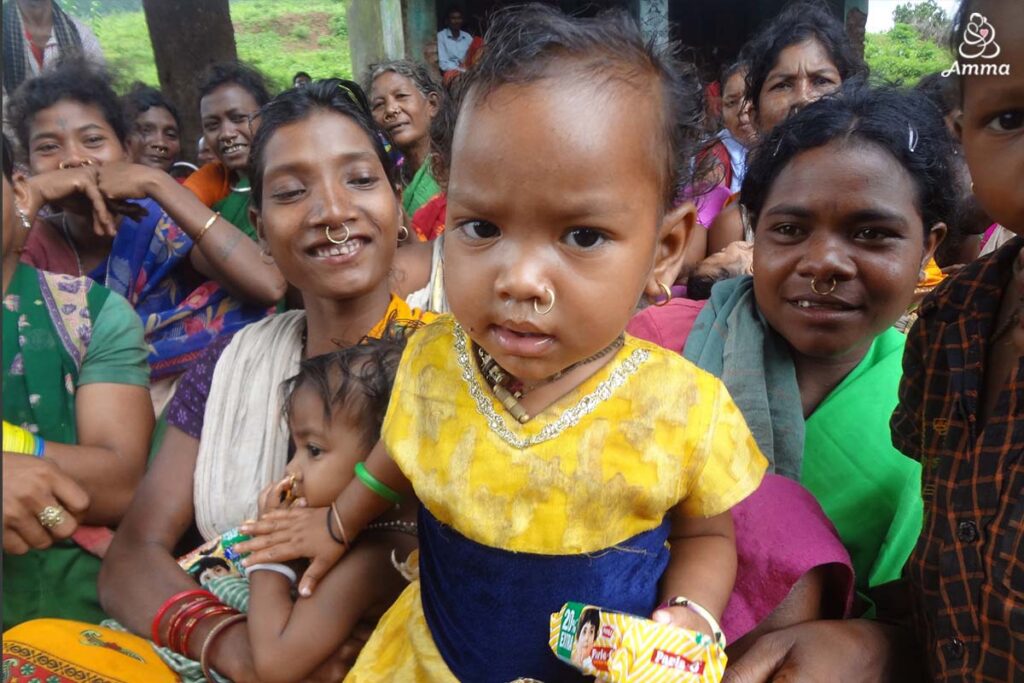
In 2006, volunteers with one of Amma’s local satsangs began an initiative in Kalahandi, Odisha to reach isolated tribal communities. It was a district that had, for years, stood as a grim national symbol of extreme poverty. With genuine empathy for families plagued with hunger and isolation, a group of volunteers came together to form Amrita Matru Pitru Seva—Seva for Our Mother and Father.
Teams move through the district’s remote, roadless hill villages to provide basic needs for parents left behind after their children have gone to cities for daily-wage labour. The project has continued to evolve and expand work to provide healthcare, food, and clothing, alongside a revival of ancient folk traditions.
- 1200 to 1500 beneficiaries per year
- Health camps
- Basic needs distribution
- Revival of cultural heritage
2008: A small fix can bring a smile
Dentistry became, in its own integral way, another mode of support. Since 2008, the Amrita School of Dentistry’s Amritasmitham outreach has carried free check-ups, extractions and, most visibly, hand-fitted dentures into Kerala’s tribal belts, where tooth loss is so routine among the elderly that it is treated as an accepted stage of ageing.
Over more than a decade the programme has reached upward of 5,000 people and fitted close to 800 complete dentures — a seemingly small intervention that nonetheless restores the ability to eat, speak clearly, or smile without embarrassment.
- 5,000+ people provided free dental treatment
- 800 elderly fitted with dentures
2013: When a tablet becomes a classroom
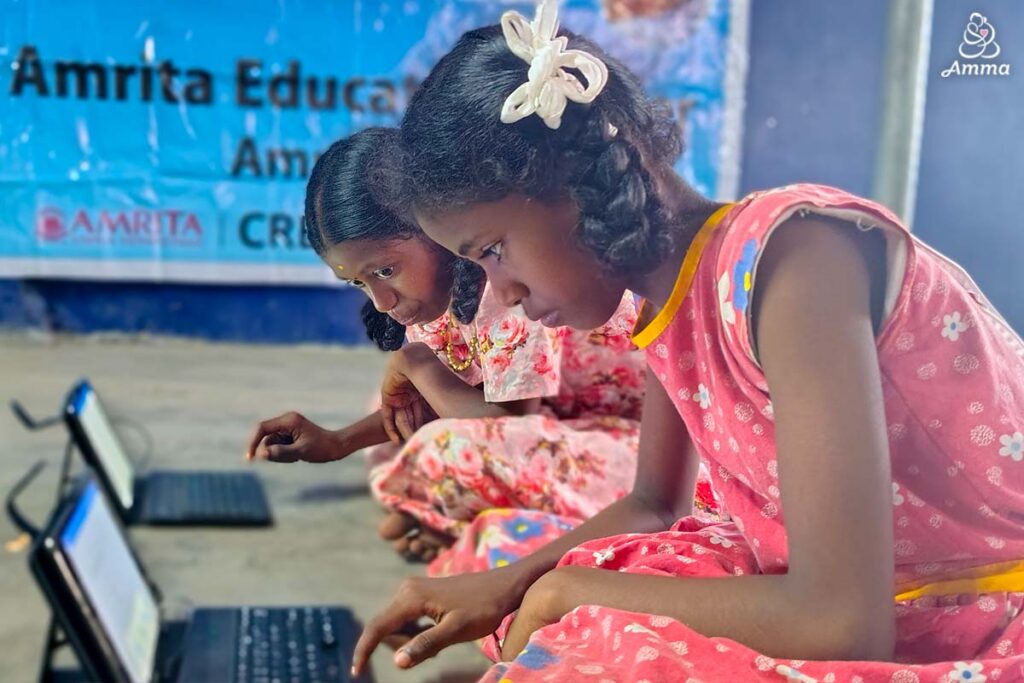
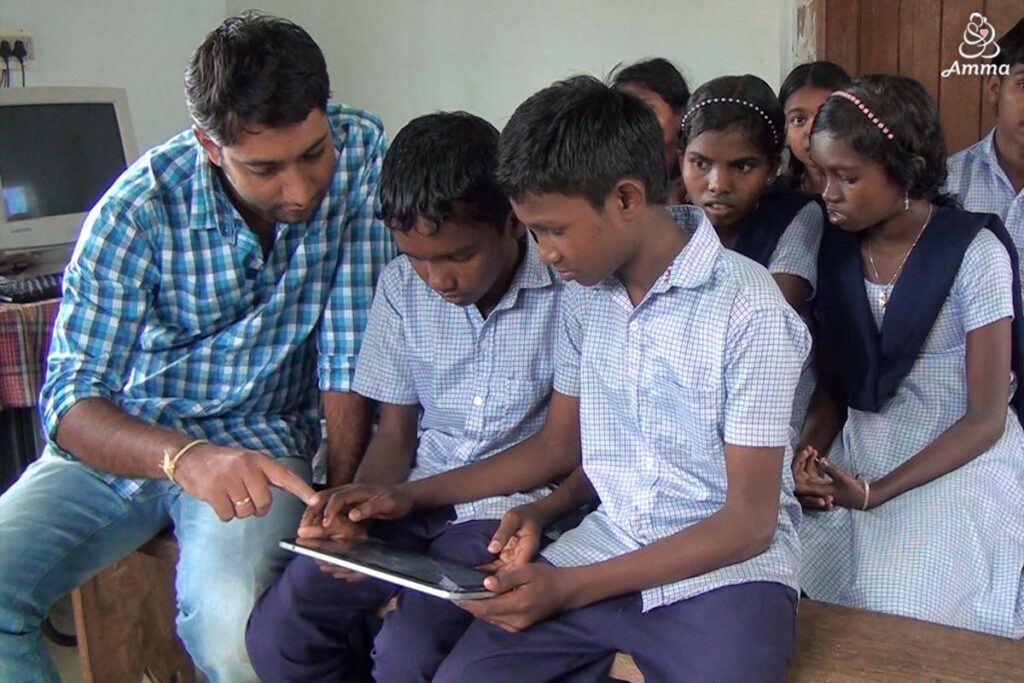
The following decade brought new urgencies and Amrita responded with the equally rapid development of new technologies. The University had already begun tackling a more basic problem: what tribal children were, and were not, learning. Amrita came up with a simple solution — use tablet technology to draw the children to tuition classes. With this as their first experience with tablets or mobile phones, the children are absolutely fascinated. AmritaRITE — Rural India Tablet Enhanced Education — was first deployed in flood-hit rural Uttarakhand in 2013.
As an initiative with Amrita’s Center for Research in Accessible Technologies for Education (CREATE), Amrita RITE has grown into a network of after-school centres that use low-power tablets to bring lessons and basic computer literacy to villages that often lack electricity, let alone classrooms.
- 7,760+ tribal children mentored
- 41 tribes
- 21 states
2014: Powering villages off the grid
In Kerala, access to electricity lagged in the same hill villages the University’s other work was reaching. In Wayanad’s Mothakara, more than 40 tribal families lived without power, a gap that affected everything from health to safety to how late a child could study after dark.
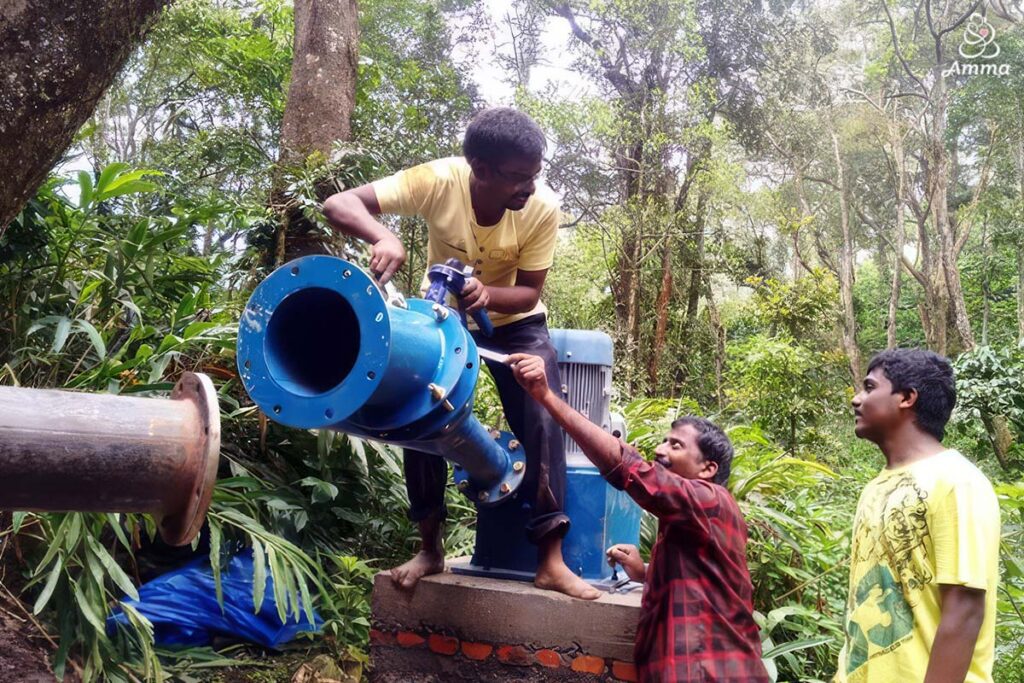
Researchers with Amrita’s Live-in-Labs spent years developing an independent solar microgrid suited to the terrain. In 2014, the completed system, Amrita Sphuranam, brought light to all six clusters and 42 houses in the village at once.
A parallel effort was developed in the hills of Komalikudi, Idukki, where 60% of the homes had no electricity. The rest faced blackouts that could last for days. Live-in-Labs installed a micro-hydroelectric plant that now supplies the 350 residents with electricity in their homes, alongside supply for streetlights, multi-grade learning centres, the village’s anganwadi (pre-school), and the local water supply infrastructure.
A solar rooftop system activates whenever the flow of water alone isn’t enough, keeping the village connected and safe with no need for reliance on external sources.
Between the two districts, self-sufficient power has replaced an unreliable, often absent grid, another instance of small teams building something durable rather than passing through with a temporary fix.
- 2 village regions gain independent access to electricity
- Solar and hydro electrical systems
- Consistent support for public infrastructure, including streetlights, children’s centres, and water supply systems
2014: When youth protect youth
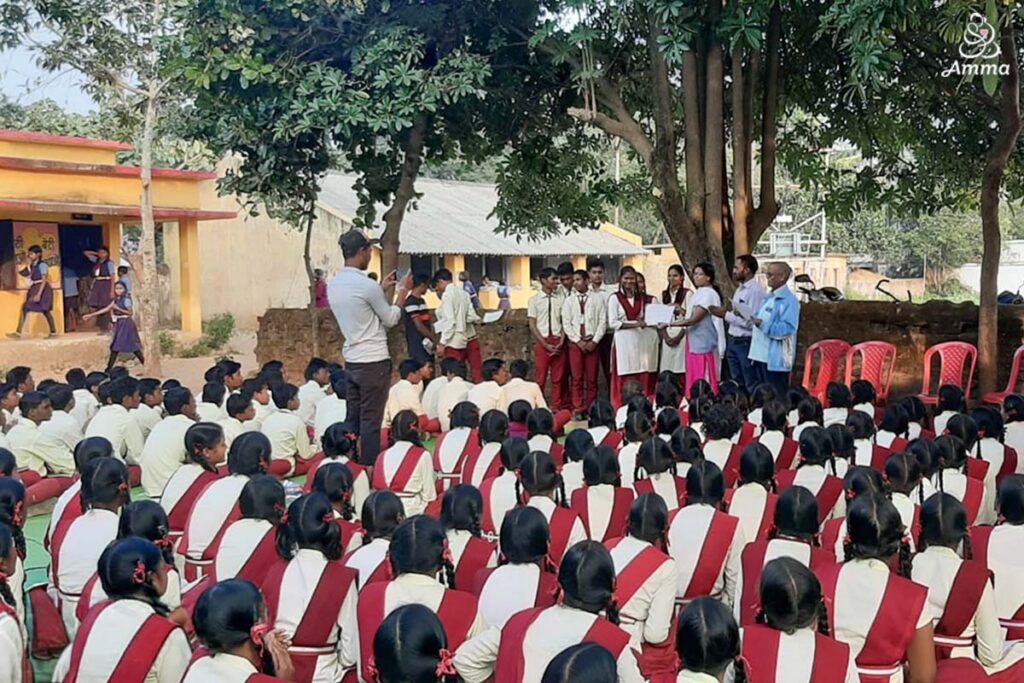
Parallel to the tutoring work, Amrita University moved forward to address an even more crucial issue for tribal children. From 2014, the Amrita Awareness Ambassadors (AAA) programme entered village schools in remote tribal belts, where substance abuse and human trafficking pose real threats to adolescents.
AAA trains the young people to educate their peers and communities on substance abuse prevention, protection from human trafficking, malnutrition, menstrual awareness, and mobile and internet safety.
This model means it is the youth who are trained to counsel and protect their own communities, rather than outside experts arriving with solutions. AAA includes a focus on reaching hostels for tribal dropout girls and in government-run centres for survivors of abuse, alongside the standard curriculum.
The Government of India has in recent years shown support for AAA through a Centre of Excellence grant from the Ministry of Tribal Affairs for implementation in Chhattisgarh, Jharkhand, and Madhya Pradesh, and through a Dept. of Science & Technology grant in Mizoram.
- 50,000+ tribal youth reached
- 600+ tribal villages
- 22 states
2014: Healing generations of harm
That same year, the Amrita De-addiction and Rehabilitation Centre opened its doors in Attapady. It was established to address a problem that had taken root across generations: alcohol and substance dependency among tribal communities already carrying the weight of poverty and displacement. The centre’s focus: how addiction takes hold and what helps people leave it behind.
The centre’s work is steady with health workers running regular medical camps across Attapady and Wayanad’s tribal hamlets. They offer free screenings for blood pressure, blood sugar, oxygen levels and fever, alongside counselling sessions and follow-up visits to affected families in their own homes. Yoga sessions bring positive support to the care, reflecting ancient India’s practices as physically, mentally and spiritually healing.
Medical and public health students have also trained alongside the centre’s staff, learning directly from the communities they serve about how addiction takes hold and what helps people leave it behind.
- Clinical and rehabilitation facility in Attapady
- Regular health worker camps, counselling, and family follow-up
- Yoga as a bridge to deep healing
2014: Bridging the digital divide
With grant support from India’s DeitY (Department of Electronics and Information Technology), CREATE launched a project to train 1,000 tribal youth in basic computer skills and health awareness. The training reached remote tribal belts across Kerala, focusing on communities in Idukki, Attapadi, and Wayanad.
Many of these hamlets lacked access to traditional computers, and some even lacked consistent electricity. To bridge this gap, instructors used tablets as the primary medium of instruction, bringing technology directly to learners’ fingertips.
The digital curriculum was designed and delivered in Malayalam to ensure effective learning. Alongside standard computer training, it included social awareness modules delivered through video content, covering digital safety, health, hygiene, and disease prevention.
- 1,000 youth reached in Kerala’s remote tribal belts
- Focus included digital safety, health, and hygiene
2015: Tribal artisans reclaim the land
A resilience-first thinking brought a new idea to tribal communities in the forest belts around Coimbatore, Tamil Nadu. Instead of working against the landscape’s own limits, Irula settlements have learned to work with them. An Amrita-run centre has spent more than a decade training the tribal artisans to turn lantana camara, an invasive South American shrub that has choked out native undergrowth across the Western Ghats, into a new source of livelihood.
With new methods to make the weed useful, they are producing furniture, handicrafts and toys. This creative endeavour converted a threat to the forest into a source of income for the communities who depend on Mother Nature to survive.
2018: National recognition accelerates the work
Recognition from the Central Government followed in 2018, when the Ministry of Tribal Affairs designated Amrita a Centre of Excellence in Tribal Empowerment through Digital Inclusion. The projects are now active across Jharkhand, Chhattisgarh, Odisha, Maharashtra, Rajasthan, Kerala, Tamil Nadu, Madhya Pradesh, and Andhra Pradesh.
Under this umbrella, the work has diversified further: integrating Ayurveda and allopathy with the knowledge of traditional village healers; addressing micronutrient deficiencies among tribal women through nutrition awareness; using mobile technology to track antenatal care and vaccination in Chhattisgarh’s Bastar district and Kerala’s Wayanad; and confronting sensitive but urgent concerns — menstrual hygiene stigma among adolescent girls, and the misuse of oral contraceptives among tribal women who avoid the older, coercive practice of enforced isolation during menstruation.
- 9 states with active projects
- Health integrates allopathic, Ayurveda, and traditional medicine
- Addressing crucial health issues among women
2020: Pandemic relief becomes a new foundation
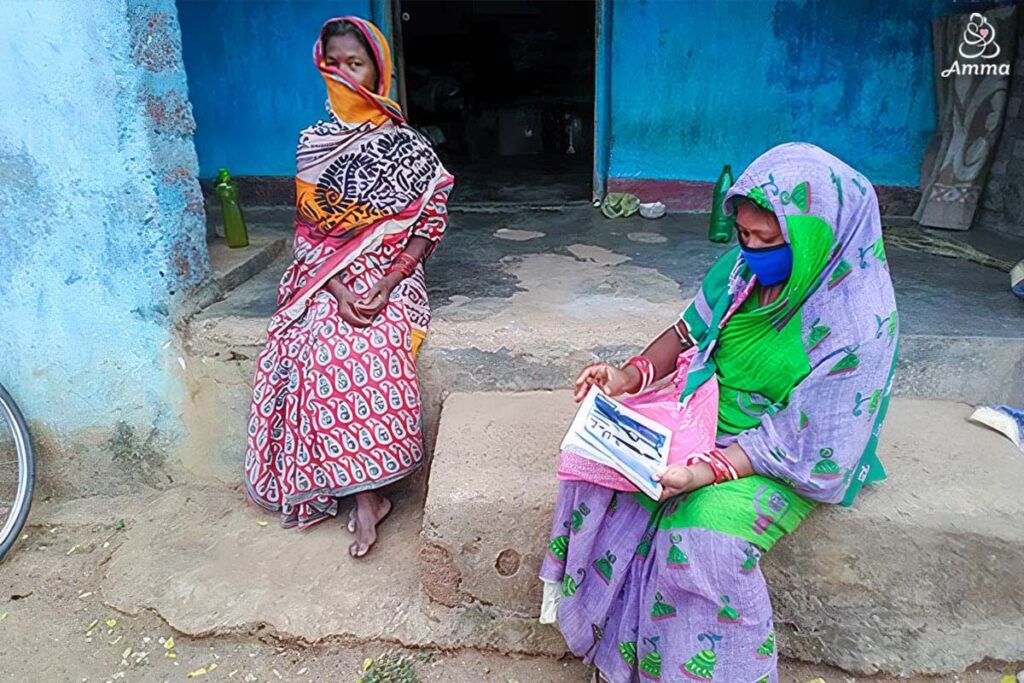
Then came 2020, and a pandemic that struck hardest at those least equipped to face it. In India’s remote tribal areas lockdowns meant isolation compounded upon isolation, and low connectivity made even basic awareness a struggle. Amrita’s Tribal Centre of Excellence became a lifeline, using local village staff and mobile technology to spread information, support migrant workers stranded far from home, and to inform tribal communities about the urgency of vaccination.
After the pandemic, the connection shifted from relief to strength. Community Resilience Resource Centres now operate across fourteen states, each supporting ten to fifteen villages in agriculture, livelihoods, health, and education. The goal is not simply to hand out aid, but to train members to start enterprises, understand markets, and manage finances. This means that the transformation has the momentum to reach entire communities, not scattered individuals.
- Reaching isolated areas through local village staff
- Aiding stranded migrant workers and their families as they returned home
- Vaccination awareness
- The start of Community Resilience Resource Centres across 14 states
2022: Ancient farming meets modern science
In 2022, the university’s School of Agricultural Sciences began support for tribal farmers to bring back Pancha Krishi, a deeply traditional agricultural practice. Fundamentally, it translates to a method of mixed cropping without row orientation.
Amrita’s research began by collaborating with tribal farmers in Attapady and Sadivayal to rebuild food and nutritional security alongside climate resilience on their own land. In a unique approach, the farmers are pairing the traditional cropping patterns of Pancha Krishi with newer agronomic support rather than replacing one with the other.
Amrita approaches Pancha Krishi as a “multidimensional polyculture,” meaning multiple types of crops are grown together in the same space to mimic natural ecosystems. Through this system, diverse crops are naturally more resistant to extreme weather, pests, and diseases compared to single-crop fields, and growing a wider variety of produce provides a more balanced and diverse diet for their communities.
2023: Independence for isolated tribes in Mizoram
The reach has extended further still, into India’s northeast. In 2023, Amrita partnered with Mizoram University, both supported by India’s Department of Science and Technology, to open a Science, Technology & Innovation Hub for a state where tribal people make up 95% of the population.
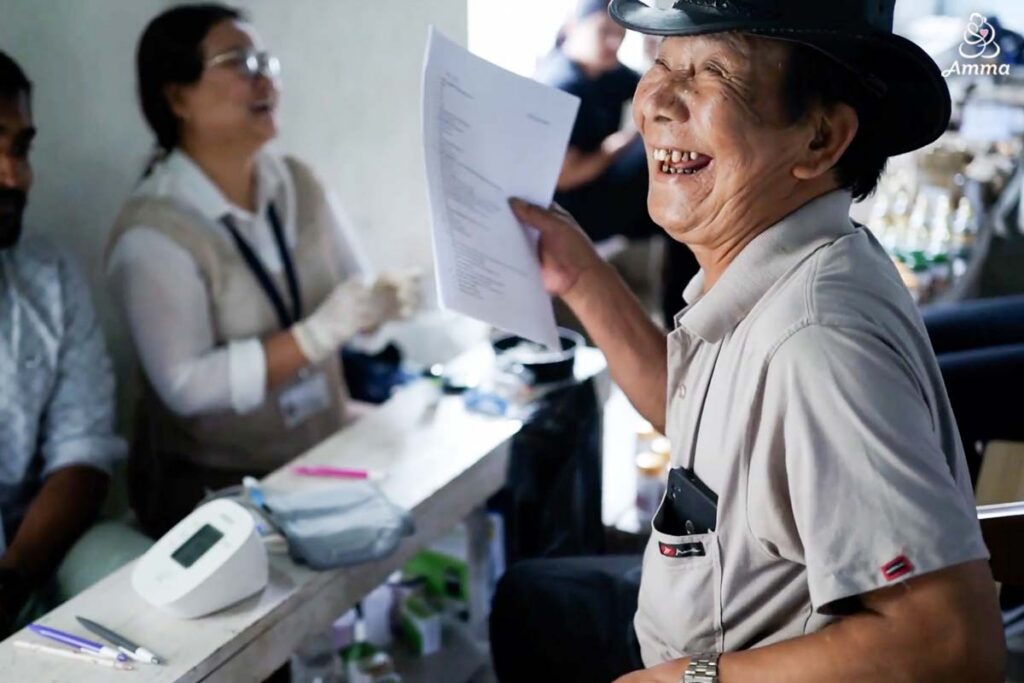
A team of 15 local leaders has reached 9,000 members of six tribes, 70% of whom are women and girls. The work included health camps and Ayurveda outreach, nutrition counselling for anganwadi mothers, digital literacy and cybersafety training for youth, and substance abuse awareness in children’s care homes.
As well, the project began interviewing tribal healers to digitally document their traditional healing practices and ensure their knowledge is not lost.
In 2025, the project marked its most concrete milestone with the establishment of a permanent building on the Mizoram University campus in Aizawl.
- 9,000 members of six tribes reached
- 15 local leaders trained
- Health camps and nutritional counselling
- Digital literacy and cybersafety for youth
- Substance abuse awareness in children’s care homes
- Documentation of traditional healing practices
2025: A birthday offering to Amma from 11 tribes
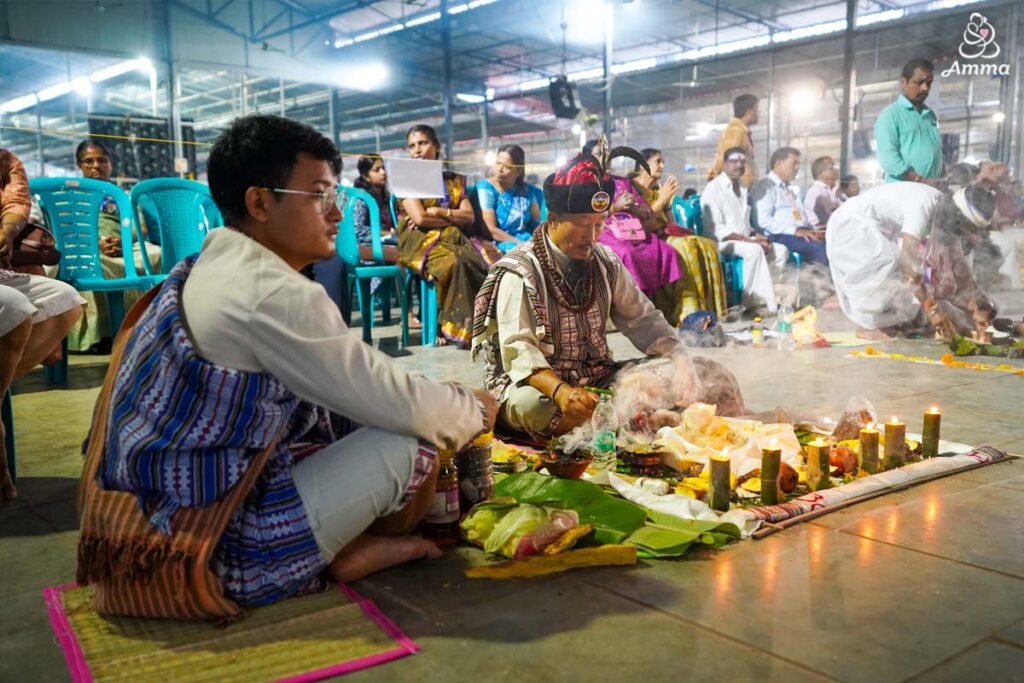
Amma’s reach to the country’s tribal people was honoured at her 72nd birthday celebrations. Leaders from 11 communities across India travelled to Amritapuri, bearing offerings of forest honey, grains, shawls, and traditional art for Amma.
Their presence was met with deep gratitude, as they brought forth an ancient connection to the Divine forces and Mother Nature. Among the tribes were Andhra Pradesh’s Konda Dora and Kottiya; Sikkim’s Lepcha; Chhattisgarh’s Muriya; Odisha’s Gond; Kerala’s Muthuvan, Irula, Mudugar and Paniya; Tamil Nadu’s Irula; Jharkhand’s Munda; Bihar’s Santhal; and the Nilgiri Hills’ Baduga.
The tribal leaders performed their own ancestral ceremonies alongside the Ashram pujaris and pujarinis who conducted Vedic rites. The vibrations that emanated from all traditions carried the same truth — we are one universal family.
Four decades, one unbroken thread
What began with small tutoring centres in an isolated area of Kerala has evolved into a nationally recognised model for tribal empowerment. The University’s work represents a continuum in which community needs generate research questions; research leads to interventions; interventions generate evidence and publications; and successful approaches become on-the-ground action.
Most powerful is that the thread connecting those first steps in the 80s to the far-reaching projects of today remains unchanged. Amma’s conviction is that upliftment must be developed with communities, in their own villages, on their own terms — never handed down from above.