


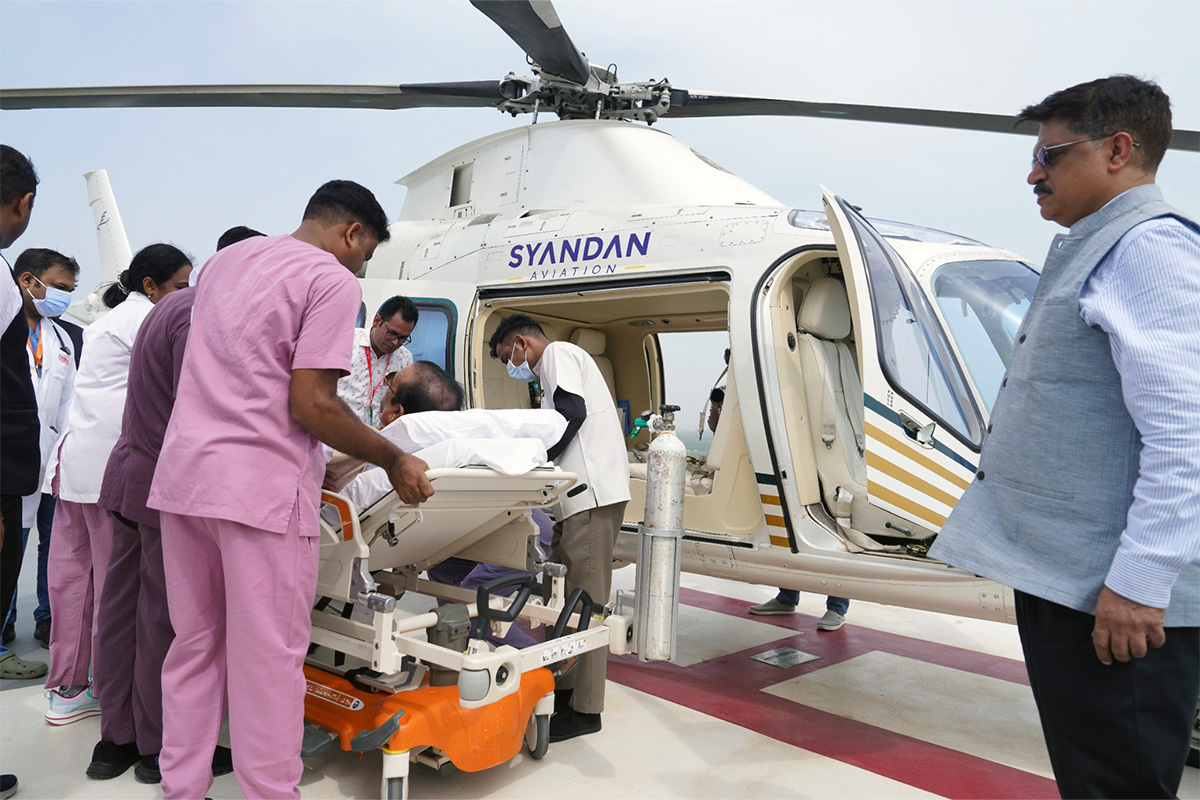
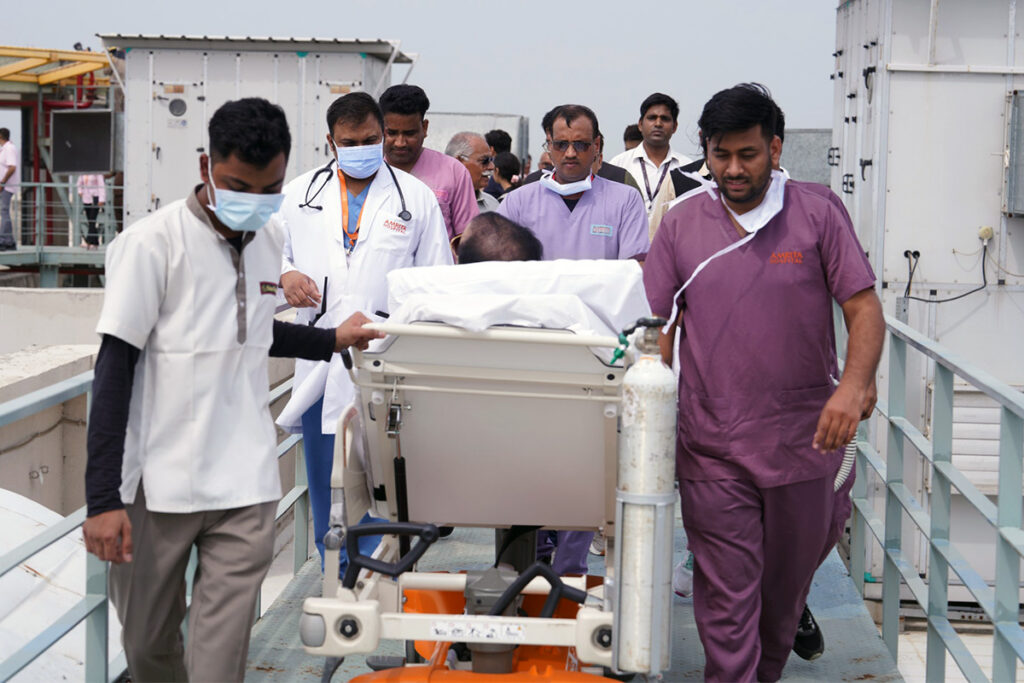
A helicopter from Kanpur, Uttar Pradesh, landed on Amrita Hospital, Faridabad’s 28-meter rooftop helipad on August 30th, marking its first integrated helicopter patient transfer. It is the largest elevated helipad at any hospital in the entire country and the first elevated helipad in North India. A multidisciplinary medical team was positioned at the landing site and immediately transferred the patient to the Emergency Department via a dedicated internal access route.
This enables patients to be flown from other cities directly from the helipad into the hospital’s emergency and critical-care system, avoiding an additional road transfer from an airport or off-site landing facility. It marks the successful completion of a rigorous process which started in February 2026 to test the helipad’s aviation-safety systems, structural readiness, landing parameters and patient-transfer protocols.
A Carefully Planned Coordination
The transfer required close medical supervision and careful coordination between the helicopter crew and the hospital’s emergency and clinical teams because the patient has Stage 3 chronic kidney disease and recently experienced an episode of heart failure with preserved ejection fraction, or HFpEF. The patient had also sustained a partial fracture of the D11 vertebra in February.
Unlike a conventional landing arrangement, the rooftop helipad is directly connected with the Emergency Department, intensive care units, operating theatres and specialist services. This integrated pathway is intended to shorten the interval between helicopter touchdown, clinical assessment and treatment to ensure effective and timely patient treatment.
Dr Sanjeev Singh, Medical Director, Amrita Hospital, Faridabad, said, “This patient transfer demonstrates why the rooftop helipad was created: to connect helicopter evacuation directly with hospital care. For a patient with multiple medical complexities, safe transport depends not only on the flight but also on what happens immediately after landing. Our helicopter, emergency and clinical teams coordinated each stage to secure a seamless transition from touchdown to medical assessment and treatment.”
Streamlined Critical Care
This is another compassionate way that Amrita Hospital, Faridabad hopes to support time-sensitive intercity transfers involving trauma, stroke, cardiac emergencies, organ transplantation, high-risk maternal and neonatal care, and other conditions requiring advanced multidisciplinary intervention. It also strengthens the hospital’s ability to receive patients from locations where distance or road travel may delay access to tertiary and quaternary care.