


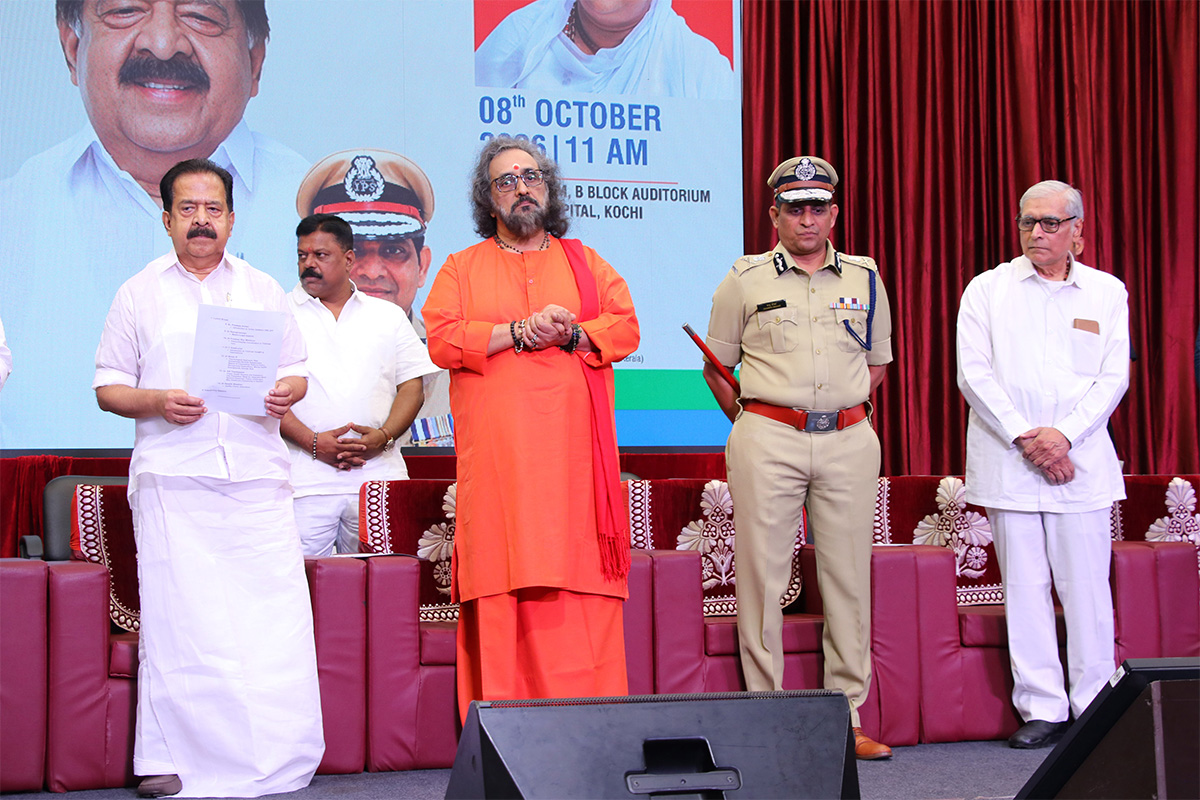
Another phase of Operation Toofan was launched on October 8, 2026 with a specialised training initiative in collaboration with Amrita Hospital, Kochi. The Kerala Police aim to bring a scientific and public-health-oriented approach to narcotics enforcement by training police personnel not only in strict legal enforcement, but also in addressing the medical, psychological, and rehabilitative dimensions of substance abuse.
Kerala’s Minister for Home and Vigilance, Ramesh Chennithala; Vice Chairman of the Mata Amritanandamayi Math, Swami Amritaswarupananda Puri; and State Police Chief, Rawada A. Chandrashekhar IPS, participated in the event as chief guests.
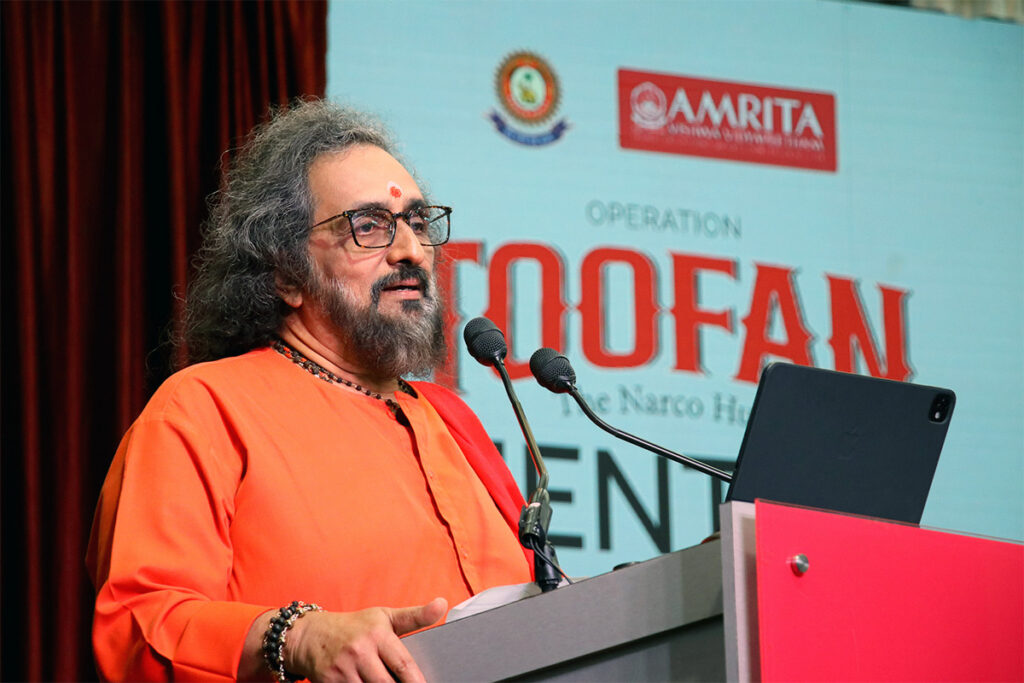
Swami Amritaswarupananda Puri described Operation Toofan as a noble mission, noting that selflessness is its core element. He observed that many people, both in India and across the globe, have fallen prey to substance abuse.
He expressed the hope that every police officer would transform into a ‘Toofan’ (typhoon) and breach the strongholds of the drug mafia before these syndicates could target children. He conveyed his best wishes for the government’s unwavering fight against substance abuse.
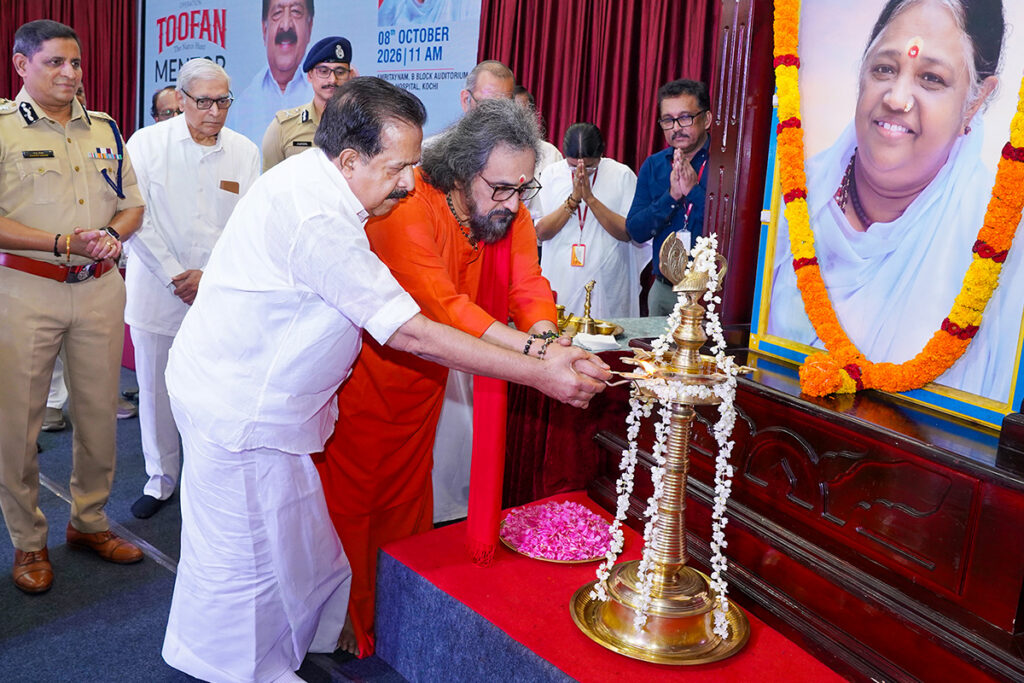
Addressing the gathering, Minister Chennithala identified drug abuse as one of the most critical challenges facing Kerala today. Calling the crackdown on narcotics both a “moral and divine responsibility,” the minister urged officers to perform their duties with uncompromising integrity, pledging the complete backing of the Home Department.
“The Kerala Police’s fight against drugs will continue unabated, and this marks the second phase of Operation Toofan,” Minister Chennithala said. “Alongside the state government and the police, all public hospitals and around 35 private healthcare facilities across Kerala are partnering in this effort, with Amrita Hospital being the first to come forward.”
He acknowledged women’s contribution to the success of the first phase through their action as a collective, acknowledging that mothers could identify changes in their children early. This is in keeping with Amma’s vision that the principle of motherhood is a power that can uplift the entire world.
The Kerala Police’s fight against drugs will continue unabated.
Kerala’s Minister for Home and Vigilance, Ramesh Chennithala
The training program emphasized the need to prioritize health-related interventions, treatment, and rehabilitation alongside legal proceedings in cases involving substance abuse. Amrita Hospital conducted sessions on topics such as communicating with suspected individuals, scientific methods for identifying narcotic substances, assessing the signs and severity of substance abuse, medical assistance, mental health emergencies, counseling, and identifying suicide risks.
The training also introduced various aspects of the Operation Toofan initiative, including legal and medico-legal considerations and the social consequences of substance abuse.
Approximately 650 police officers from 473 police stations across the state participated in the training program which showcased the following key components:
- Toofan One software – developed by Amrita Technologies to coordinate and streamline the daily operations of the police.
- Toofan Warriors, the ‘Kuttipetti’ and ‘Police Bro’ systems – developed in collaboration with Amrita University to bring school-level complaints regarding substance abuse directly to the police departments.
- The Toofan-Thambi project – launched by Amrita Hospital to free tribal communities in the state from substance abuse.
- The Toofan Care system – encompassing police-hospital coordination, telemedicine, treatment, and rehabilitation. The training modules, conducted by specialist doctors from Amrita Hospital, covered clinical assessment and medico-legal protocols. ‘Toofan Care’ aims to prevent substance abuse and ensure that those in need receive necessary medical treatment, psychological support, and rehabilitation through an integrated approach involving the healthcare and law enforcement sectors.
Training sessions for police officers were conducted in the following:
- Scientific identification of illicit substances and evaluating degrees of intoxication
- De-escalation and communication strategies when interacting with suspects
- Immediate medical intervention and psychological first aid
- Crisis counselling and identifying suicide risks among substance users
- Long-term rehabilitation pathways and multi-agency monitoring