


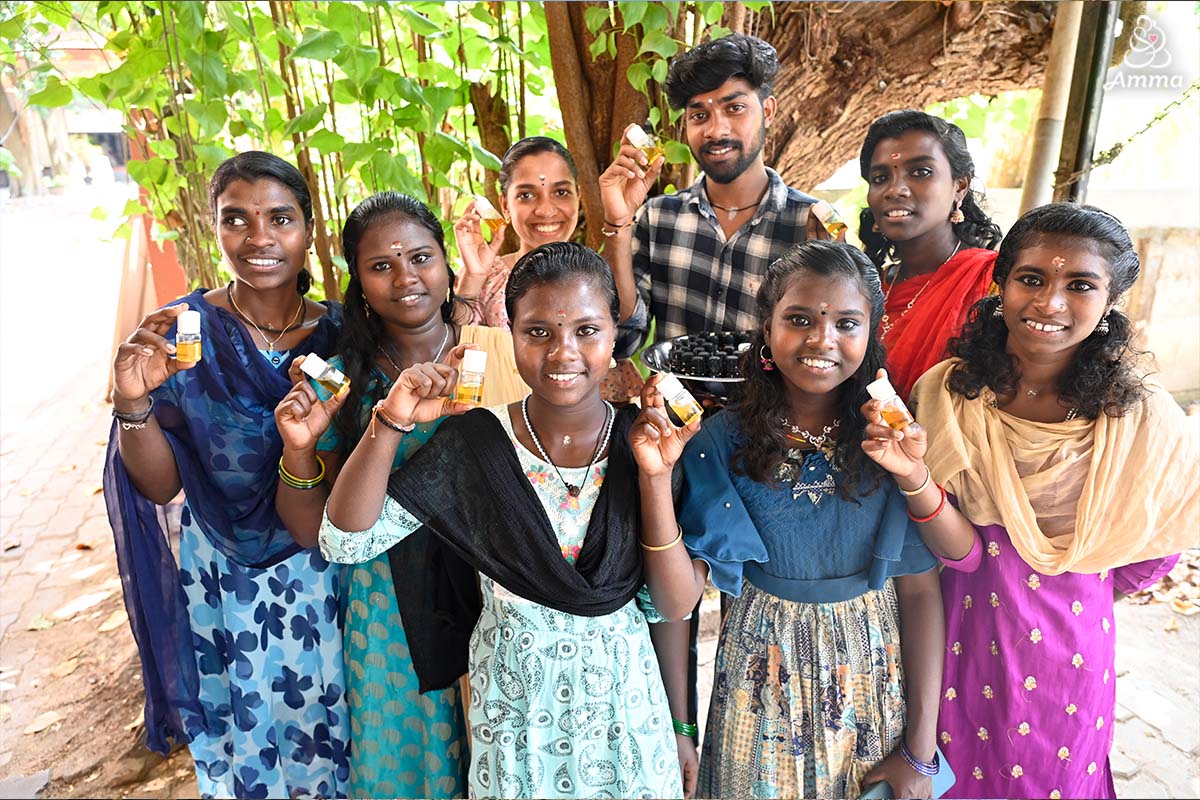
Valaramkunn in Wayanad, Kerala is a remote tribal village that shelters the people of the Paniya, Kurichya, and Kattunayakan communities. The families greatly depend on the men, who are irregular daily wage workers.
The women are confined to doing unpaid household chores or limited employment funded and offered by the Govt of India, causing them economic insecurity. These families often struggle to meet basic standards of living. This leads to malnutrition and other poor health outcomes.
The vision of empowering women through sustainable, locally rooted livelihoods together coined the lemongrass oil extraction training programme by Amrita University’s Live-in-Labs, enabling the tribal women to generate a steady income while utilising resources naturally available in their region.
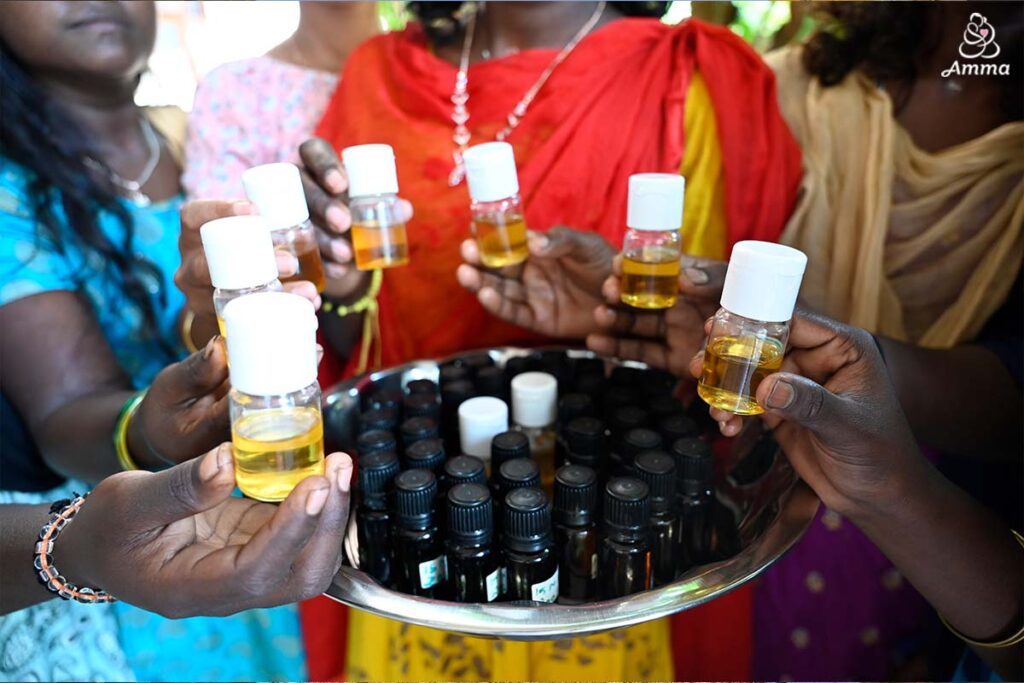
Lemongrass, a high-value medicinal plant found in Valarmkunnu, is an essential oil used in medicines, soaps, candles, disinfectants and insect repellents, making it a product with strong market demand. This potential was identified by our training team and focused the project on equipping women with practical skills in lemongrass oil extraction, enabling them to transform resources into a viable source of income.
A series of intensive training events lasting seven days took place, with planned follow-up activities. Seven girls aged 18 to 24 years of the Kurichya and Paniya tribal communities took part.
The training session fostered self-confidence and leadership quality among the women who were once shy to even interact with the trainers, and also developed teamwork and peer learning. The training increased the awareness of record-keeping, resource management, and sustainability.
The training programme included:
- Demonstration through practical experience
- How to operate the oil extraction machines
- Safety training and operating procedures for oil extraction
- Evaluation before and after the training session in order to measure growth in knowledge
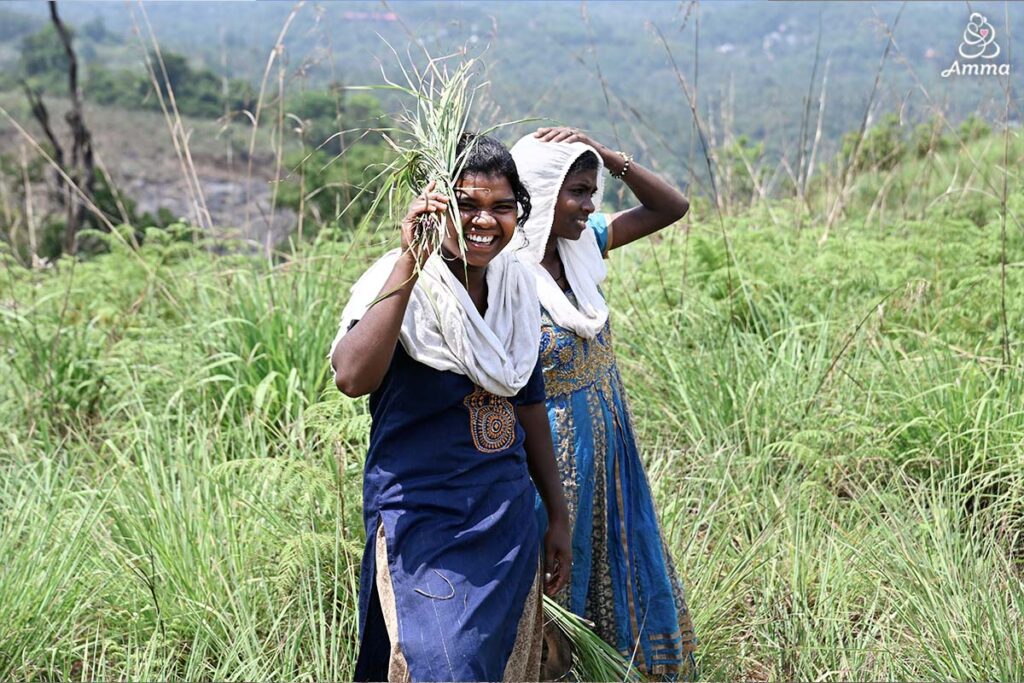
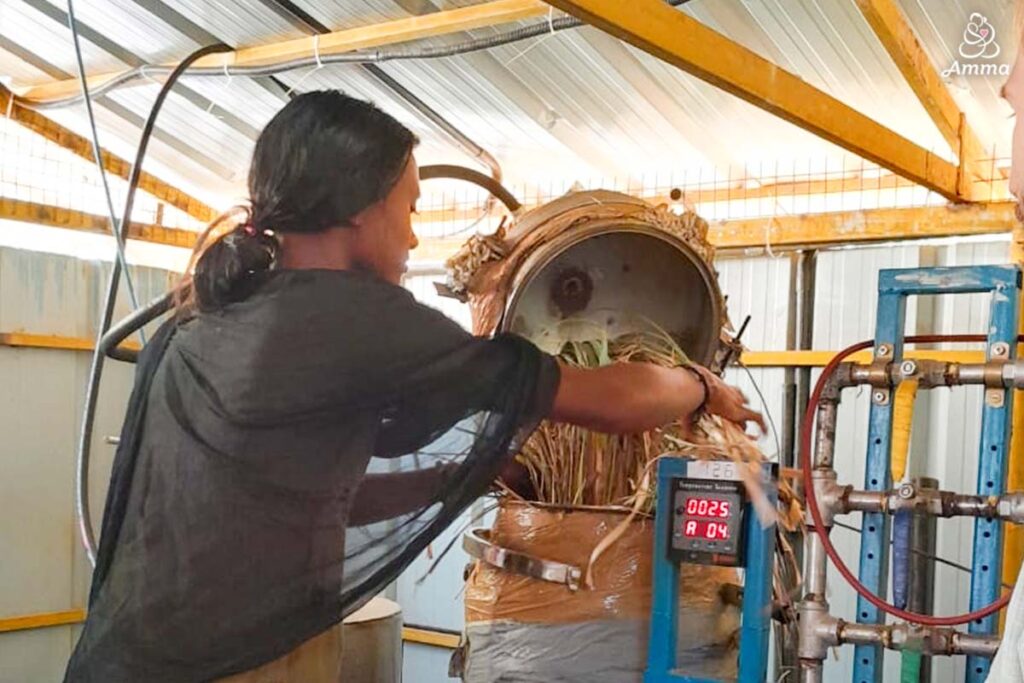
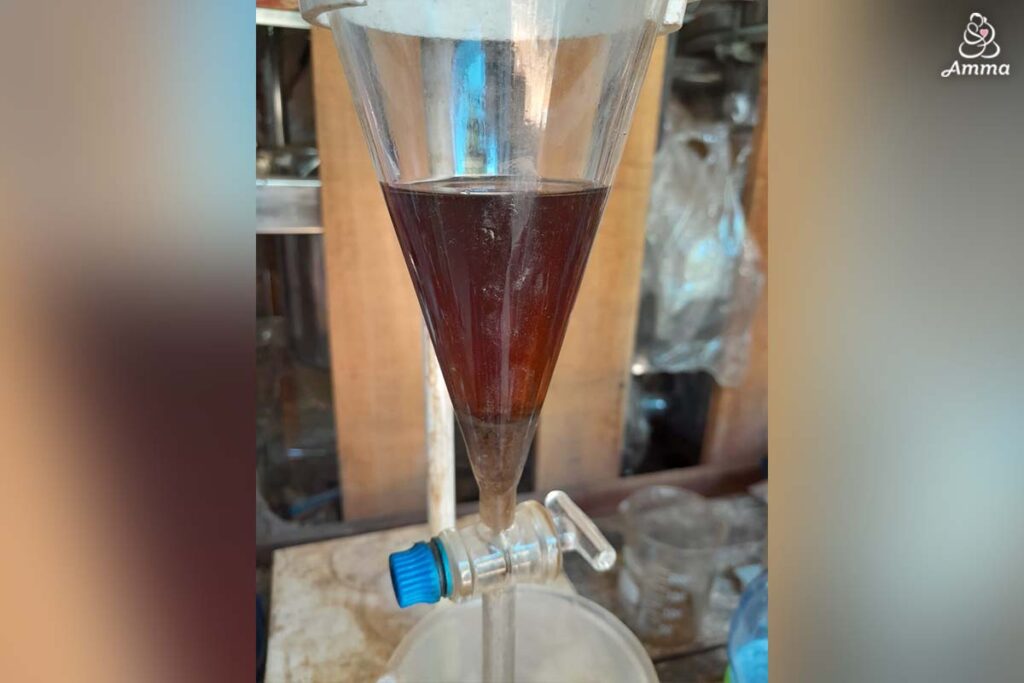
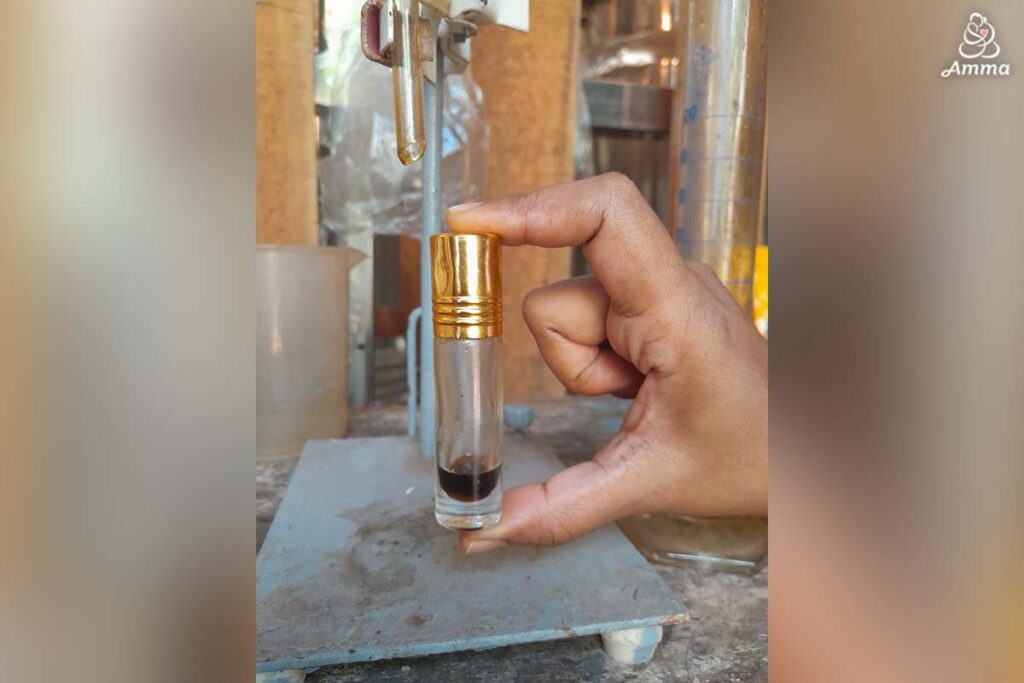
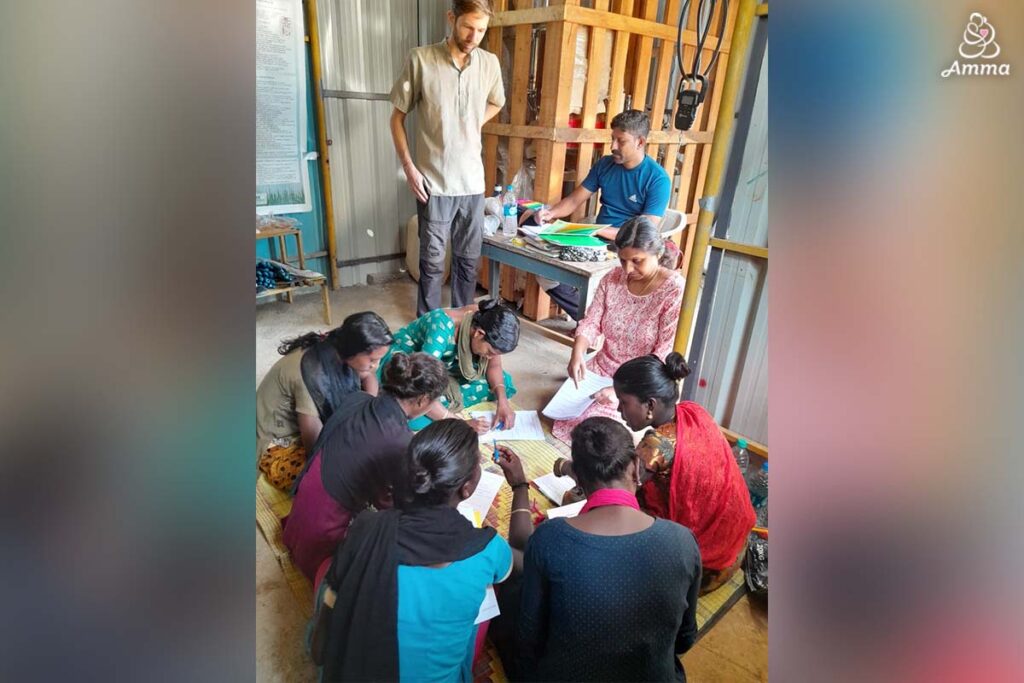
All trainees learned to be proficient in the use of both electric and gas boilers, to safely operate the equipment, to identify and rectify potential leaks, and to independently complete the oil extraction process.
Experiential learning has been at the heart of the programme since the beginning: participants have taken an active part in grass harvesting, machine operation, and in monitoring the results of extraction. Initially, during the training, they faced difficulties due to the low quality of lemongrass and leaks in the machinery, which reduced the output. But the participants’ resilience and adaptability were visible throughout the training.
The extraction process became theirs fully by Day 4, and they managed to extract an impressive 54 ml of high-quality lemongrass oil. As this was achieved, their confidence was boosted even further, keeping them motivated. The efficiency of the new machine was acknowledged by the community to outdo the old systems of extraction by far, which required almost 900 kg of grass to yield very minimal quantities of oil.
The evaluation reflected the impact of the training, and the post-training assessments showed the drastic improvement of knowledge by over 70% among participants. This highlighted the significance and effectiveness of the hands-on, supportive training approach.
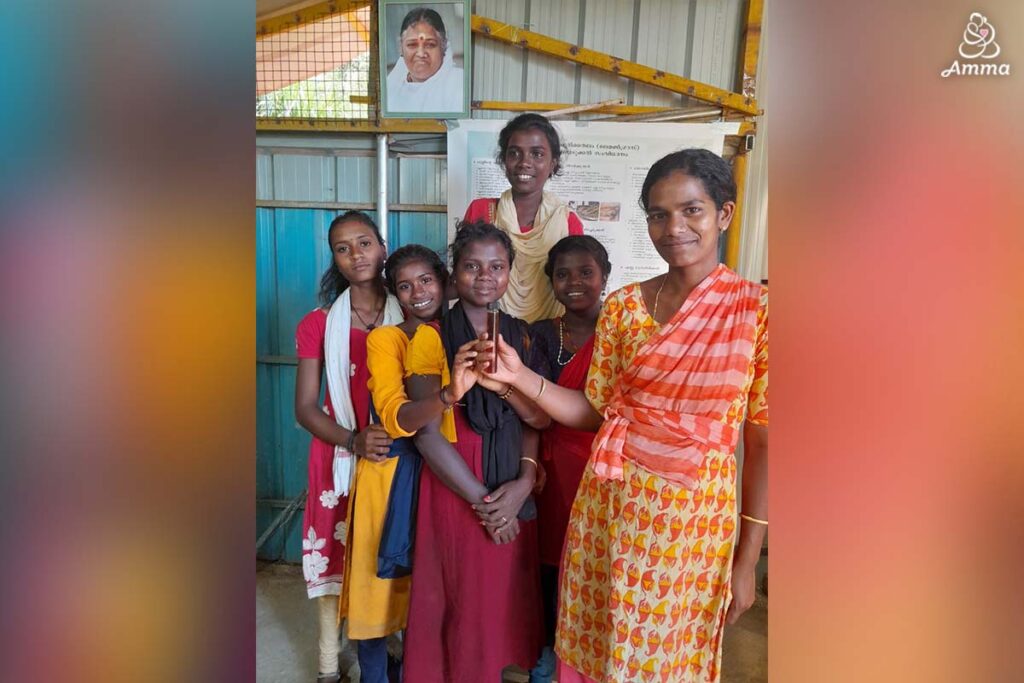
Certificates were awarded to each participant along with work attire and wages as a token of love and encouragement. This reinforced dignity and recognition of their effort and made them understand what they are all really capable of.
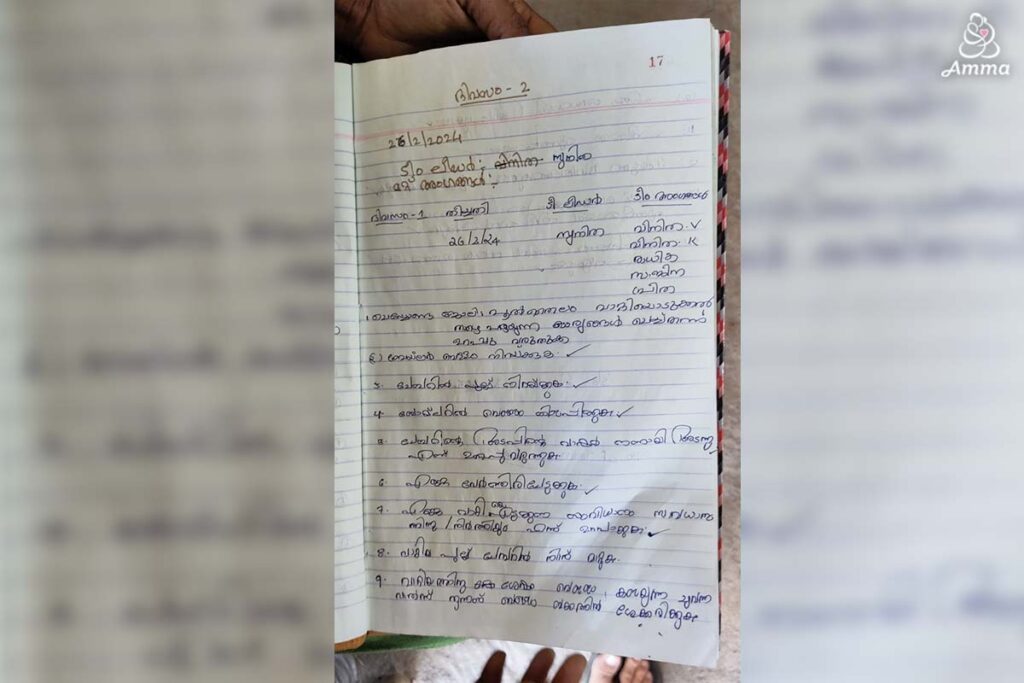
Post-training, a monitoring phase began, to ensure long-term sustainability and trainers assisted the class both online and offline. The daily activities and manufacturing processes were documented on registers and relayed through a special WhatsApp group called “പുൽതൈല പരിശീലനം” (Pulthaila Parisheelanam, which means: Lemongrass Training).
Over the course of the weeks, the women continuously produced lemongrass oil, growing more independent and efficient. This came despite the challenges of team reorganisation and coordinating member expertise to prevent personal or communal factors from interfering with the process.
The project represents a living example of how the most vulnerable sections of society can be raised through the development of self-reliance, dignity, and inner strength. Empowering the women of the tribes to convert resources into sustainable livelihoods not only brings economic security, but also hope and confidence.