

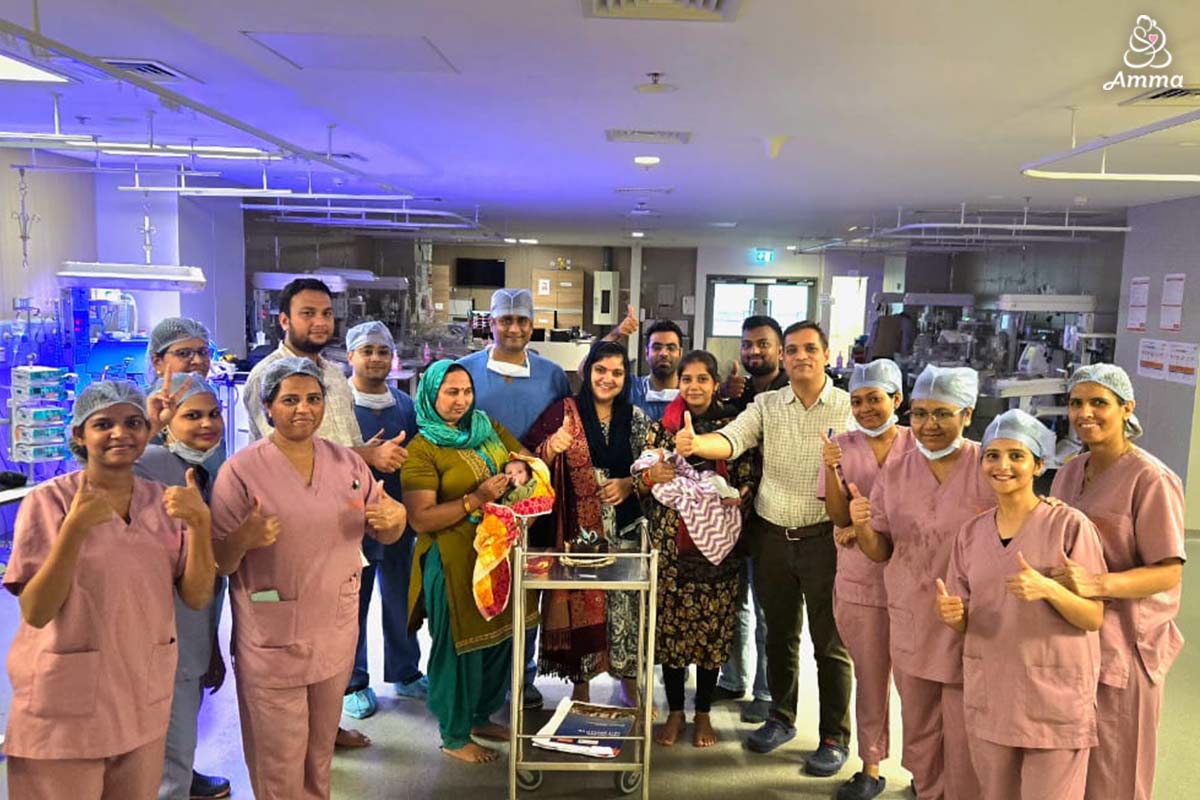
Over the course of three months, Amrita Hospital, Faridabad achieved a landmark in medical science by saving five infants born with one of the rarest and deadliest birth defects—Congenital Diaphragmatic Hernia (CDH). The accomplishment stands out nationwide.
CDH puts the liver, intestines, kidneys, and stomach inside the chest cavity. Amrita’s Paediatric Surgery, Neonatal, and Paediatric Intensive Care teams immediately performed marathon surgeries and then weeks of newborn intensive care. Today, the infants not only survived but are thriving.
One family described their journey as an emotional rollercoaster, “When doctors told us our baby’s liver and intestines were in the chest, it felt like a death sentence. Every day in the ICU, we prayed for a miracle. And today, watching him breathe, feed, and smile is that miracle. For us, this is truly our child’s second birth. We can never thank the doctors enough.”
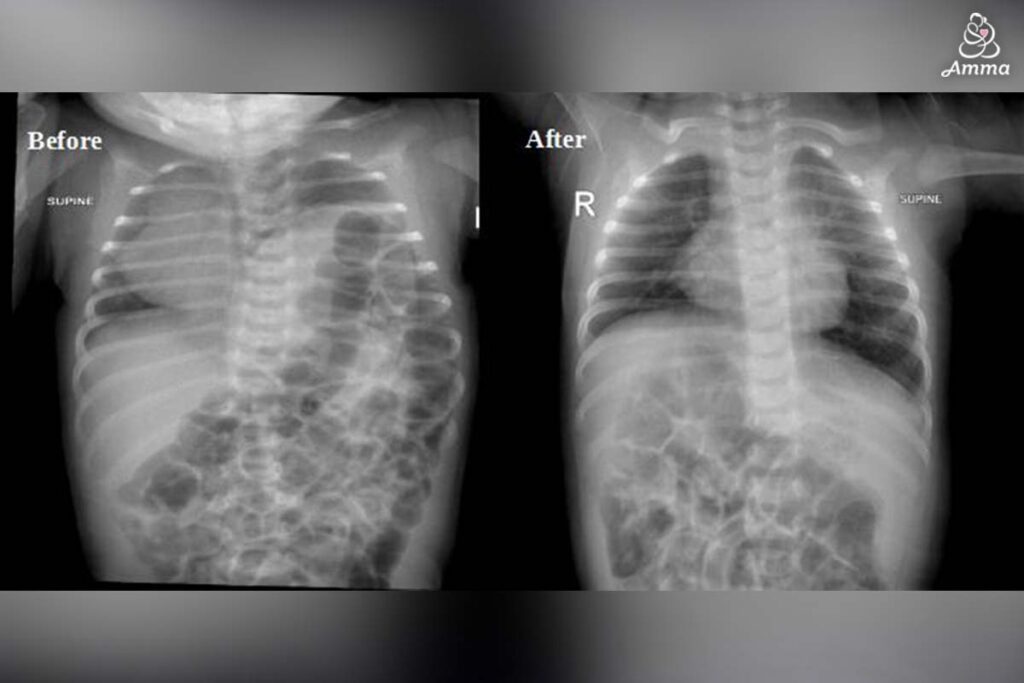
Senior Consultant & Head of Paediatric Surgery, Dr. Nitin Jain, explained CDH doesn’t just push organs into the chest, it crushes the lungs before they can even form.
One of the babies had the even more rare case of the organs gathered on the right side, something considered the toughest and utmost challenging in paediatric surgery.
“These are battles fought hour by hour. CDH doesn’t just compress the fetal lung but also prevents its development and expansion,” said Dr. Jain.
“But we refused to give up. What you see today are babies who were given a second birth through medicine, technology, and sheer determination.”
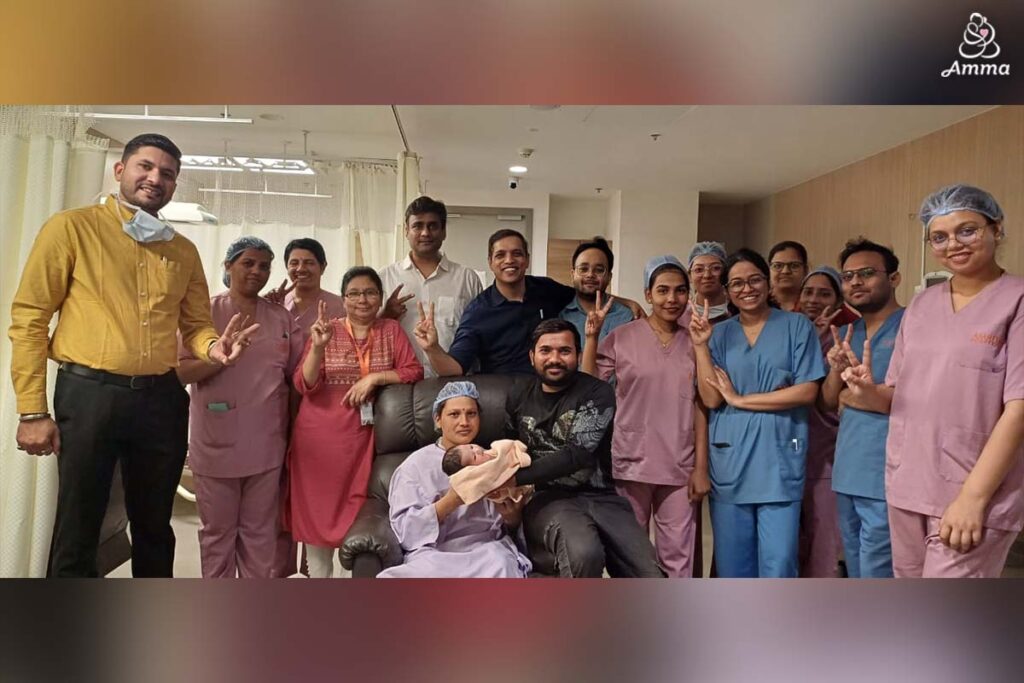
The children have now been discharged, and their families are extremely thankful to the doctors and to Amma for all the prayers and blessings. Amma’s touch of love and compassion has been with these babies and their families all along, which made everyone witness what they felt was a medical miracle.
In India, around 33–50 babies per 100,000 births have CDH, a condition so serious that, in many resource-poor parts of the world, survival rates can be less than 40%, especially when the defect occurs on the right side.
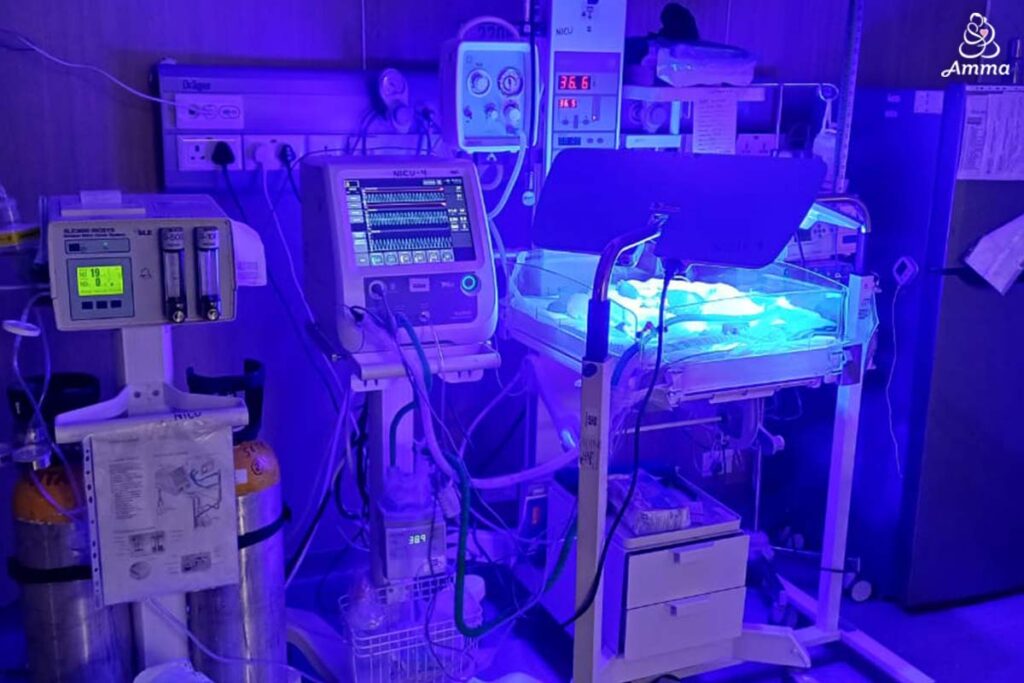
At Amrita Hospital, however, outcomes are quite different. Advanced neonatal care supported by a committed multidisciplinary team even allows the highest-risk cases to show survival rates surpassing global averages, while offering families a lifeline when hope seems very far away.
Doctors underline that discharge is not the end of the journey. Many babies with CDH need long-term follow-up to manage problems such as pulmonary hypertension, growth delays, and feeding difficulties. However, with extensive ICU support and follow-up care, a surprisingly large number of these children grow up to lead active, normal lives.
Amrita Hospital, Faridabad, has emerged as one of the country’s premier centers for complex neonatal surgery, offering world-class care informed by compassion, expertise, and commitment to saving even the most fragile lives.