


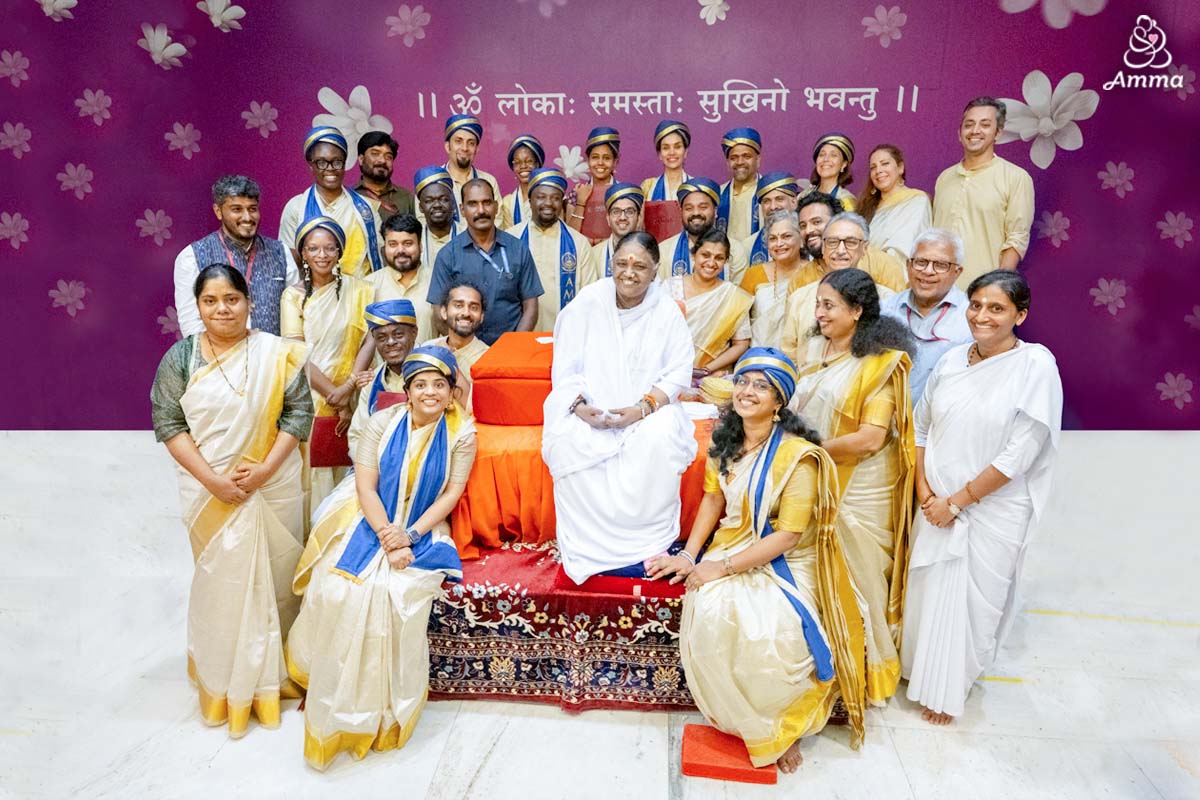
It was an inspiring day full of hope. Amrita University proudly announced the graduation of the inaugural cohort of its landmark E4Life PhD, a pioneering, fully-funded program in sustainable development. This class includes 23 scholars from 9 countries—India, Zambia, Nigeria, Zimbabwe, Uganda, Ghana, Iran, Tanzania, and the United Kingdom, with many of them hailing from disadvantaged or underrepresented communities.
Initiated in 2020, the E4Life (Education for Life) PhD Fellowship, offered by Amrita’s School for Sustainable Futures, is a doctoral scholarship program, instituted under the visionary guidance of Amma as Chancellor of Amrita University.
Learning through living
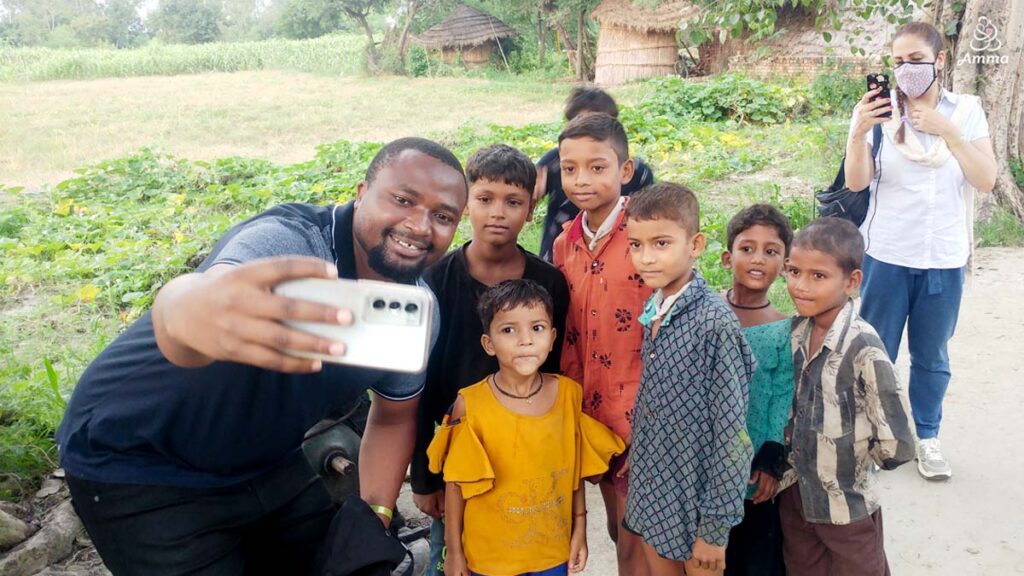
What makes the program unique is its immersive, field-based model, where the researchers spend up to a year living in impoverished villages across rural India. Working through Amrita’s Live-in-Labs®, they strive to develop solutions for the challenges the people face in their daily lives.
Amma emphasises that the projects must always be based upon collaborating with the community—a bottom-up approach. First, researchers listen to the people, embrace their values, and adjust to their cultural and social systems. Rooted in compassion, this empowers global scholars, fosters interdisciplinary research, and uplifts rural communities through co-created, sustainable solutions.
With an annual endowment of $5.1 million, E4Life supports 100 PhD scholars each year, providing full coverage of tuition, accommodation, living expenses, and research grants. The program’s research excels in its academic quality and impact, with the first batch including 210 papers.

“This graduation marks a historic milestone for Amrita and stands as a powerful beacon of hope for a sustainable future. These 23 scholars are more than graduates, they are trailblazers,” said Dr Maneesha V Ramesh, Provost & Dean, School for Sustainable Futures.
“I sincerely hope they carry forward Amma’s vision of compassion and selflessness to one and all as they step into diverse career paths.”
Compassion-driven science
The first class has successfully completed their PhDs in critical and socially relevant areas such as climate resilience, tribal welfare, public health, food security, gender equity, and sustainable agriculture.
Living with people in India’s villages, I saw how knowledge based on compassion can truly change lives, including my own.
Dr Mojtaba Enayati, E4Life Scholar from Iran
Across more than 10 states in India—from the coastal shores of Kerala to the tribal heartlands of Karnataka to the flood-prone plains of Bihar—these scholars shared roofs, meals, and stories with the local people, translating their research into solutions that are sustainable.
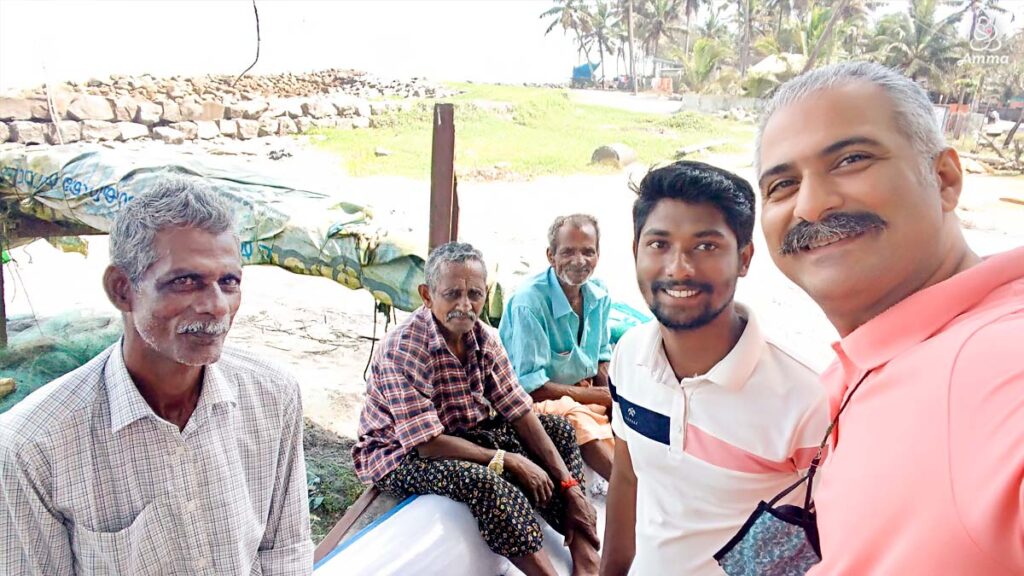
In Byse, Karnataka, a scholar from Zambia co-created a sustainable fish feed using jackfruit and seabuckthorn to support local livelihoods. In Uttar Pradesh, anemia among women and children was tackled through field assessments and sanitation innovations. In Alappad, Kerala, blockchain tools and blue economy strategies empowered fisherfolk, especially women.
A new business model for small-scale farmers
Dr Habanyati Estone Jiji from Zambia focused on empowering small-scale tribal farmers in Tamil Nadu to develop business models that successfully bring their crops from field to market. By maintaining their independence, they do not lose profit through the need to include a middle man. They are communities who have faced stark challenges—from droughts to floods in this world of climate change.
“The goal is to help the farmers become resilient through participatory rural appraisal where you codesign with them. Many NGOs use a top-down approach and the farmers are not involved in the planning. We consult with the farmers so they can make their own decisions.” he explained.
“This system helped me to learn a lot from the farmers here, as in Zambia, I was working with farmers who are also struggling. As I return home, I will implement this business model. It has truly shaped me to contribute to my country.”
Sharing knowledge across many fields
E4Life’s academic work aligns with the United Nations Sustainable Development Goals (SDGs), combining interdisciplinary fields, data science, traditional knowledge, and systems thinking with a deeply compassionate approach. The projects will continue to be monitored under the care of university staff stationed in the regions.
Dr Mojtaba Enayati is from Iran. His project involved developing a system for small-scale, low-income fishermen to reach out to a larger customer base. The platform includes ensuring high quality fresh fish for the consumers, so that all parts of the equation are supported.
“Coming from Iran, I had always dreamed of using science to serve people, but I never thought I’d be part of something so deeply human,” he shared.
“The E4Life PhD taught me that research is not just about solutions, it’s about relationships, empathy, and trust. Living with people in India’s villages, I saw how knowledge based on compassion can truly change lives, including my own.”
As these 23 scholars return to their homelands or continue working across India and beyond, they carry with them not just doctoral degrees, but Amma’s timeless message: “In our approach to sustainable development, we should not forget that it is by strengthening the people at the base of the pyramid that the entire edifice of society becomes healthy and strong.”
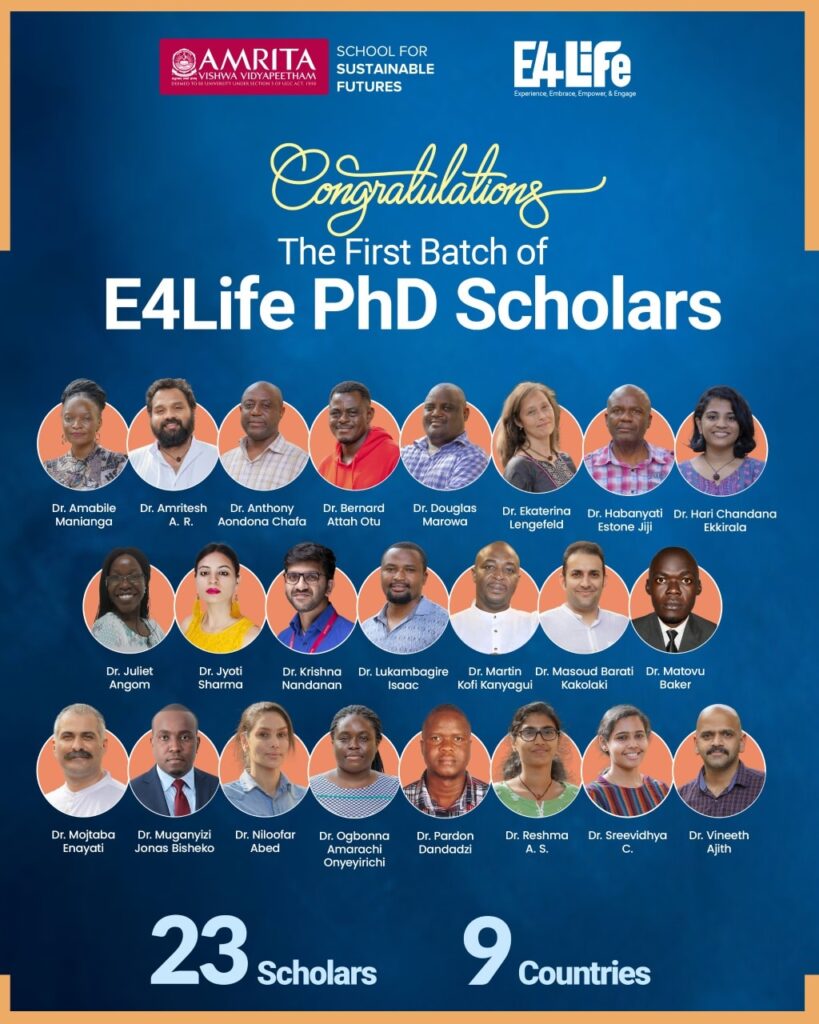
Dr Amabile Manianga – Zambia: Valorisation of Underutilized Jackfruit Seeds and Seabuckthorn Leaf Metabolites in Functional Fish Feed Formulation: Addressing Livelihood Resilience for Marginalized Groups
Dr Amritesh AR – India: The role of Sociocultural practices and management systems on the sustenance of sacred groves in Kerala: An Exploratory Study
Dr Anthony Aondona Chafa – Nigeria: A Study on Financial Inclusion and Women Empowerment in Maira Community, Punjab India
Dr Bernard Attah Otu – Nigeria: A Study on Occupational Vulnerability, Migration and Its Impacts on Health and Education Among Tribal Communities in Alirajpur District in Madhya Pradesh
Dr Douglas Marowa – Zimbabwe: Implications of land use changes on livelihood and food security of rehabilitated tribes: A case study of Jenu Kurubas in Mysore District, India
Dr Ekaterina Lengefeld – UK: Restorative Ecology and Systems Thinking Approaches to Address Land Degradation in a Rural Community, Karnataka, India
Dr Habanyati Estone Jiji – Zambia: Integrating Indigenous Knowledge through Participatory Co-design approach for Sustainable Agriculture among Smallholder and Tribal Farmers in Tamil Nadu
Dr Hari Chandana Ekkirala – India: Integrated Dynamic Multi-hazard Risk Management Framework for GLOFs, Landslides, and Floods
Dr Juliet Angom – Uganda: Pathways to Sustainable Agricultural Adaptation Strategies Among Smallholder Farmers In India: A Study In Gujarat
Dr Jyoti Sharma – India: Assessing the Prevalence and Determinants of Iron Deficiency Anemia Among Women and Children: Insights from Nagla Chandi Village, Uttar Pradesh
Dr Krishna Nandanan – India: Assessing the Prevalence and Determinants of Iron Deficiency Anemia Among Women and Children: Insights from Nagla Chandi Village, Uttar Pradesh
Dr Lukambagire Isaac – Uganda: Harnessing Data Analytics, Drones and Satellite Remote Sensing for Resilient and Sustainable Livelihoods in Fisheries Communities
Dr Martin Kofi Kanyagui – Ghana: Assessing the Effectiveness of Institutional Arrangements in Reducing Water Scarcity and Improving Sanitation Services Delivery in Nagla Chandi, India
Dr. Masoud Barati Kakolaki – Iran: Participatory Modeling Framework: Climate Adaptation for Sustainable Agriculture Through Climate-Responsive Interventions
Dr Matovu Baker – Uganda: Co-designing Sustainable Interventions for Women’s Empowerment in the Blue Economy
Dr Mojtaba Enayati – Iran: OceanNet Blockchain: A Blockchain-based Platform for Livelihood Resilience and Sustainability in a Small-scale Fishing Community in India
Dr Muganyizi Jonas Bisheko – Tanzania: Water Conservation and Management: A Pathway for Improving Agricultural Sustainability and Farmers’ Livelihoods in Ransai Village, India
Dr Niloofar Abed – Iran: Developing Species-Specific Defense Mechanisms to Enhance Farm Protection, Sustainable Livelihoods, and Food Security in Harirampura, Rajasthan, India
Dr Ogbonna Amarachi Onyeyirichi – Nigeria: Multidimensional Poverty and Sustainable Livelihoods in India: Some Insights from Marginalized Rural Communities
Dr Pardon Dandadzi – Zimbabwe: Evaluating and Enhancing Drinking Water Quality and Sustainability in Marginalised Rural Communities: A Case Study of Barapita Village, Odisha, India
Dr Reshma A S – India: Participatory Digital Platform for Water Quality Management Integrated with Advanced Chlorine Decay Model for Health Risk Assessment
Dr Sreevidhya C – India: IoT-Enabled Smart Biogas Digester for Gobar Waste Management at Household Level in Cold Climate Region: A Case Study of Nala, Rudraprayag, Uttarakhand, India
Dr Vineeth Ajith – India: Integrated Framework and Toolkits for Water Sustainability through Community Empowerment